Structural Drying in Roeland Park, KS
Drying focuses on readings, equipment placement and checking framing and subfloor until they are dry, whatever the construction, so wet buildings finish with numbers instead of guesses.
(888) 902-1696Call about drying a wet building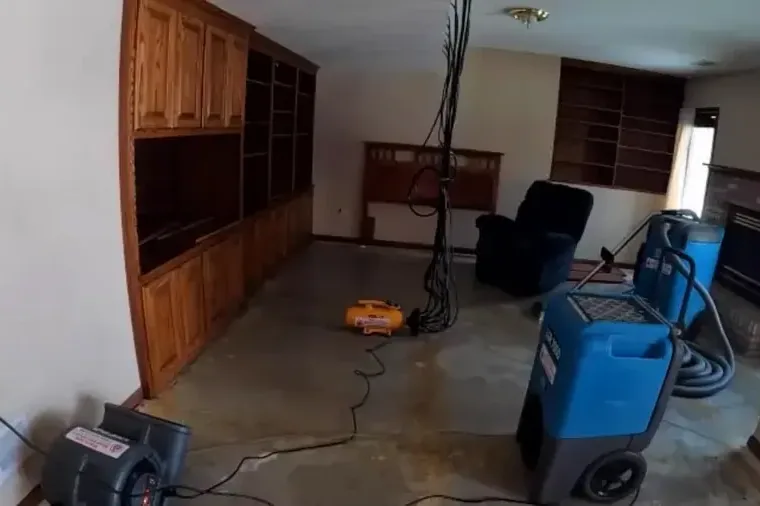
First steps for structural drying and dehumidification
- Take starting readings
Meters record how wet each material is before equipment starts.
- Place the equipment
Air movers and dehumidifiers go where the readings call for them.
- Monitor each visit
Readings are repeated and equipment is moved or added as needed.
- Confirm dry targets
Equipment comes out only when every material reaches its target.
What does structural drying and dehumidification cost in Roeland Park, KS?
Drying cost follows the drying class, the number of rooms and how many days the equipment runs. A larger wet area or dense material raises the number, even when the water was clean.
Class 1 or 2
- Limited area drying
- Air movers and dehumidifier
- Moisture log each visit
Class 3
- Wall and ceiling drying
- Insulation checks
- Equipment moved as needed
Class 4
- Hardwood and concrete drying
- Specialty drying equipment
- Extended monitoring
Ranges are typical, not a quote: category of water, square footage, material class and how fast drying started move the number most. Run the water damage cost calculator for a closer range.
How structural drying and dehumidification is handled, start to finish
Moisture is mapped before any equipment goes down, so the drying plan matches what is actually wet, and the equipment stays until the readings say dry.
Measure
Starting readings are taken from each material.
Place
Equipment is set by the readings.
Monitor
Readings repeat at each visit.
Release
Equipment leaves once all materials reach targets.
Structural drying is the part of a water loss that takes the longest and shows the least. After the water is gone, moisture is still inside framing, drywall and subfloor, and it leaves only when equipment and airflow are set to pull it out. This work follows water extraction on nearly every job.
How the equipment is placed
Air movers send air across wet surfaces and into opened cavities, and dehumidifiers pull the released moisture out of the room. The mix and the placement come from the readings, not a fixed formula, and doors and windows stay shut so the system works on a closed space. Wet carpet that stays in place is lifted at the edges so air can reach the pad, while hardwood may be covered with a drying mat.
Controlled drying of wet framing, drywall and subfloor with air movers and dehumidifiers, directed by moisture readings until each material reaches its dry target.
Call about drying a wet buildingReading the damage by class
Drying jobs are sorted by how much material is wet. Class 1 or 2 means a limited area of wet materials, Class 3 means water came from above and soaked walls, ceilings and insulation, and Class 4 covers dense materials such as hardwood and concrete that hold water deeply and dry slowly. The class sets the equipment and the schedule.
When the equipment comes out
Readings are logged at every visit, and equipment is removed only when framing, drywall and subfloor reach the dry target for the material. A second set of readings confirms nothing rebounded. Sorting a loss early prevents the slow damage that follows a surface dry out, and the same approach applies to basement flooding cleanup and other jobs.
Structural drying and dehumidification across Roeland Park and nearby communities
Structural drying covers every part of Roeland Park, including the areas near Roe Boulevard, Roe Lane, R Park and Interstate 35, as well as the full ZIP code 66205.
The same service nearby: structural drying and dehumidification in Leawood, Mission, Merriam.
Water damage restoration in Roeland Park · every town covered
Structural Drying and Dehumidification questions in Roeland Park, KS
Structural Drying and Dehumidification help, around the clock
Everything looks dry but the walls are still damp? Call and ask about readings.
(888) 902-1696 Call, framing stayed dampHow long does structural drying take?
Most jobs run several days, depending on the materials, the amount of water and the room conditions. Readings, not the calendar, decide when equipment can come out.
Why do the machines run all day?
Moisture leaves materials slowly, and the dehumidifiers have to keep removing it from the air. Turning equipment off early lets damp air settle back into the walls.
Can closed walls dry on their own?
Seldom. Insulation and sealed cavities trap moisture, so small openings or removed baseboards let air reach the framing, and meters confirm the result.
What do the dry targets mean?
Each material has a target moisture level based on unaffected samples of the same material in the home. Drying stops once readings match it.
Is it safe to live in the house during drying?
Often yes, but the equipment is loud and warm, and the affected rooms may be closed off. Sewage losses need people kept out until cleaning is finished.
Does drying prevent mold?
Drying quickly and fully removes the damp conditions that mold needs, so finishing dry targets is the best protection against it.
Dry the building until the numbers say so
Describe the water loss and the rooms affected, and the crew places equipment by the readings and tracks every visit.
(888) 902-1696Call about drying equipment