Structural Drying and Dehumidification in Leawood, KS
Drying the structure means framing, subfloor, hardwood and concrete, not just carpet. The drying team sets air movers and LGR dehumidifiers to the class of loss and logs readings every day.
(888) 902-1696Floors feel dry but smell damp? Call now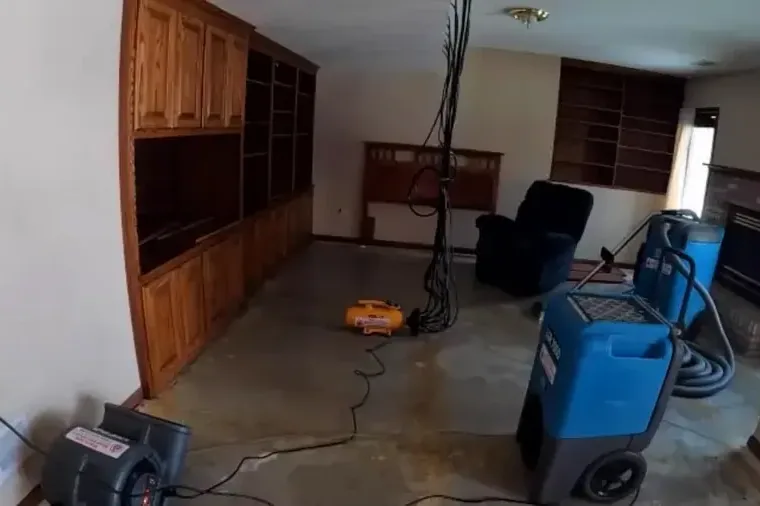
First steps for structural drying and dehumidification
- Keep the equipment running
Do not switch off air movers or dehumidifiers overnight.
- Keep the zone closed
Doors and windows stay shut so the drying zone works.
- Leave openings alone
Small wall openings stay open until readings say dry.
- Note any new damp spots
Point out stains or smells that appear during drying.
What does structural drying and dehumidification cost in Leawood, KS?
In Leawood, KS, structural drying typically runs $1,200 to $7,000, depending on the class of loss, the square footage, how many dehumidifiers and air movers are needed and how many days drying runs.
Class 1 or 2
- One or two rooms
- Air movers and one LGR
- Three to four days
Class 3
- Walls and ceilings wet
- Several dehumidifiers
- Daily psychrometric logs
Class 4
- Concrete, plaster or hardwood
- Desiccant or LGR drying
- A week or more
Ranges are typical, not a quote: category of water, square footage, material class and how fast drying started move the number most. Run the water damage cost calculator for a closer range.
How structural drying and dehumidification is handled, start to finish
Moisture is mapped before any equipment goes down, so the drying plan matches what is actually wet, and the equipment stays until the readings say dry.
Reference
A dry material is read first.
Set up
Equipment is sized to the class.
Log
Daily readings and humidity logs.
Verify
Within 2 to 4 points of the reference.
Surface dry and structurally dry are different things. Carpet can feel dry in a day while the framing, subfloor and drywall core still hold enough water to warp, swell and grow. Structural drying finishes the job.
Class of loss sets the equipment
- Class 1: a small area with low-porosity materials
- Class 2: a whole room, carpet and wall bottoms wet
- Class 3: water from above, walls soaked high and ceilings wet
- Class 4: dense materials like hardwood, plaster and concrete that hold water deep
The class sets how many air movers and dehumidifiers a room needs. Basements with concrete floors and foundation walls often fall into Class 4 and take longer. Drying zones closed off with plastic help the dehumidifiers work on the wet area instead of the whole house.
Structural drying and dehumidification in Leawood, KS: class-of-loss equipment sizing, LGR and desiccant dehumidifiers, drying zones, daily psychrometric logs and dry reference verification.
Floors feel dry but smell damp? Call nowHow drying is measured
The drying team takes readings of a dry reference material in an unaffected part of the home, then reads the wet materials against it every day. Psychrometric logs track temperature, relative humidity and grains per pound inside the drying zone. Equipment stays until wet materials read within 2 to 4 points of the reference, and that record goes into the claim file.
Why basements and hardwood take longer
Concrete releases water slowly, and hardwood floors need drying mats to pull moisture from the boards. LGR and desiccant dehumidifiers keep the air dry enough for evaporation to continue. Healthy indoor air during drying is covered by the EPA indoor air quality pages, and Ready.gov flood tips cover safety after a flood. See water extraction and basement flooding cleanup for the steps before drying.
Structural drying and dehumidification across Leawood and nearby Johnson County
The restoration team covers ZIP 66206, 66209 and 66211, from the older streets off Lee Boulevard and Mission Road to Hallbrook, South Lake, Ironwoods Park and the 119th Street corridor near Town Center.
Nearby coverage reaches Prairie Village, Mission, Roeland Park, Merriam, Overland Park, Mission Hills, Lenexa and Kansas City, MO.
Related water damage services
Structural Drying and Dehumidification questions in Leawood, KS
Structural Drying and Dehumidification help, around the clock
Want readings instead of guesses? The drying team logs moisture 24/7.
(888) 902-1696 Start daily readingsWhat does dry to within 2 to 4 points mean?
Moisture meters read a dry reference material in the same home. Wet materials are dried until their readings are within 2 to 4 points of that reference.
Why can't the fans come out when the floor feels dry?
Framing, subfloor and drywall cores hold water after surfaces feel dry. Readings decide, so equipment stays until materials match the dry reference.
What is an LGR dehumidifier?
A low-grain refrigerant dehumidifier pulls more water from the air than a household unit, keeping humidity low enough for wet materials to keep drying.
How long does structural drying take?
Most Class 1 and 2 losses dry in three to five days. Class 4 losses with concrete, plaster or hardwood can take a week or more.
Is the noise and heat normal?
Yes. Air movers are loud and dehumidifiers warm the room, which speeds evaporation. The setup is adjusted as readings improve.
What is IICRC S500?
It is the industry standard for professional water damage restoration, covering how to assess, dry and verify a water loss.
Framing and floors still wet inside? Get them dried to readings.
Water left in framing and subfloor warps and swells materials. The drying team runs equipment until the readings say dry.
(888) 902-1696Start the structural drying