Structural Drying and Dehumidification in Merriam, KS
Extraction removes the standing water, but framing, subfloors and drywall keep holding moisture, so air movers and dehumidifiers run on a plan that daily readings keep honest.
(888) 902-1696Call now to start drying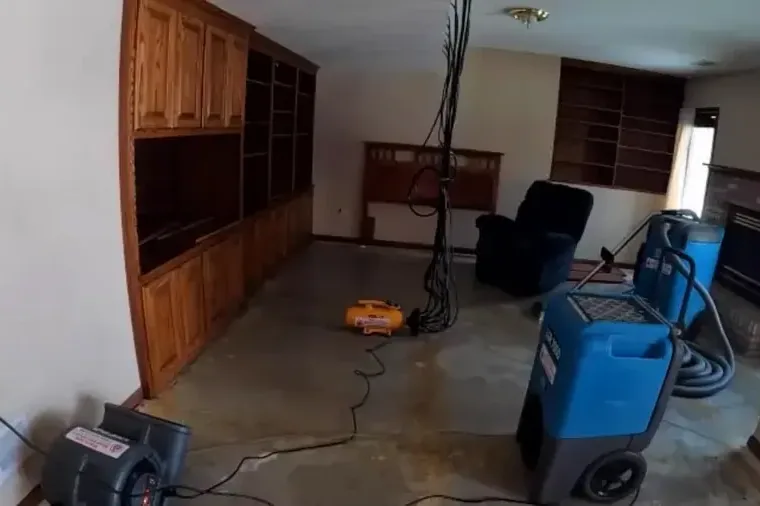
First steps for structural drying and dehumidification
- Leave things alone
Keep wet carpet and drywall in place until a meter checks them.
- Close up the space
Shut doors and windows so dehumidifiers can lower the moisture.
- Keep machines on
Do not unplug or move them, since stopped airflow slows drying.
- Call for a drying plan
Call any hour for equipment sized to the space.
What does structural drying and dehumidification cost in Merriam, KS?
Drying cost follows the drying class: Class 1 or 2 losses sit at the low end, Class 3 costs more, and Class 4 jobs with dense, deeply wet materials run highest because they need the longest drying time.
Class 1 or 2
- Air mover placement
- Dehumidifier setup
- Daily readings
Class 3
- Ceiling and wall drying
- Insulation checks
- Extra dehumidifiers on site
Class 4
- Dense material drying
- Longer equipment time
- Specialty drying methods
Ranges are typical, not a quote: category of water, square footage, material class and how fast drying started move the number most. Run the water damage cost calculator for a closer range.
How structural drying and dehumidification is handled, start to finish
Moisture is mapped before any equipment goes down, so the drying plan matches what is actually wet, and the equipment stays until the readings say dry.
Assess
Moisture is mapped before equipment goes down.
Place
Air movers and dehumidifiers are set to the plan.
Monitor
Readings are taken at each visit.
Release
Machines leave when the numbers hold dry.
Wet buildings dry on a schedule set by the materials, not by how fast an owner would like it. Downtown has row style and stand alone buildings, many from the early 20th century, and houses from the city's mid 1900s growth years add another mix, so the plan comes from readings instead of assumptions. Older construction and newer finishes can sit side by side in one block.
Setting the equipment
Air movers are placed to push air across wet surfaces, and dehumidifiers pull the moisture out of the room so the air can keep absorbing more. Doors and windows stay closed during drying, and the number of machines depends on the volume of the space and how wet it is. Hoses carry water out of the dehumidifiers so they can keep running without being emptied.
Structural drying uses air movers, dehumidifiers and daily moisture readings to bring wet framing, subfloors and walls back to a dry baseline before rebuilding begins.
Call now to start dryingDrying classes in plain terms
Class 1 and 2 losses involve limited wetting of low absorbing materials, while Class 3 means water came from above and soaked insulation, drywall and carpet. Class 4 involves dense materials like hardwood and concrete that hold moisture for a long time and need patient, steady drying. Knowing the class tells the crew how many machines are needed and how long to expect.
Daily readings and sign off
Meters are read at each visit and compared with a dry baseline, and equipment is moved or removed as sections clear. The job ends only when the numbers hold steady, and daily readings are kept so the homeowner and adjuster can see the progress. For the water removal that comes first, see water extraction, and for lower levels see basement flooding cleanup.
Structural drying and dehumidification across Merriam and nearby communities
Structural drying crews work across Merriam, in downtown row style buildings beside Upper Turkey Creek and in houses near Johnson Drive, Antioch Road, 75th Street and Interstate 35.
The same service nearby: structural drying and dehumidification in Leawood, Mission, Roeland Park.
Structural Drying and Dehumidification questions in Merriam, KS
Structural Drying and Dehumidification help, around the clock
Water gone but the walls still feel damp? Call for drying equipment.
(888) 902-1696 Call any hourWhy does drying take so long?
Water moves deep into framing and subfloors, and materials release moisture slowly. Pushing the process faster can leave hidden dampness behind.
Why do the machines stay on for days?
Air movers and dehumidifiers work together, and stopping early lets moisture return to the air and soak back into the walls.
Is the equipment noisy?
Yes, the machines are loud and run around the clock. That steady airflow is what moves moisture out of the structure.
How is dryness confirmed?
Moisture meters compare each wet material with a dry baseline. When the readings match and hold steady, the equipment can be removed.
Will drying raise the electric bill?
It can, since several machines run for days. The restoration crew can explain the equipment load, and the insurance adjuster may cover it.
Can walls dry without being opened?
Sometimes, with small holes for airflow. Walls with trapped water, wet insulation or standing moisture are opened so they can dry thoroughly.
Damp framing keeps causing damage for weeks
The drying team sets the equipment, takes daily readings and removes it only when the structure holds dry.
(888) 902-1696Merriam drying help