Structural Drying in Mission, KS
Air movers and dehumidifiers pull moisture from wet framing, subfloor and concrete, and the equipment stays in place until meter readings show the structure has returned to dry.
(888) 902-1696Call to set up the drying plan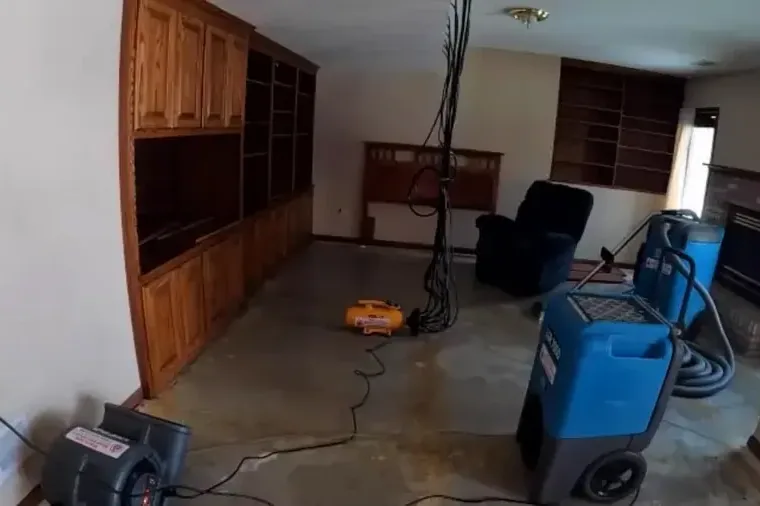
First steps for structural drying and dehumidification
- Place the equipment
Air movers and dehumidifiers go where the meter reads wettest.
- Open closed spaces
Wall cavities and flooring edges are exposed to airflow.
- Check every visit
Readings are taken at the same spots each time.
- Remove the equipment
Machines leave only after readings match the dry reference.
What does structural drying and dehumidification cost in Mission, KS?
Drying cost follows the drying class, the number of rooms and the days of equipment. Light jobs sit near the bottom, while dense materials and deep moisture take the top of the range.
Class 1 or 2
- Partly wet floors
- Small number of rooms
- Short equipment run
Class 3
- Water from above
- Ceilings and walls wet
- Several drying days
Class 4
- Concrete and hardwood
- Deep stored moisture
- Extended specialty drying
Ranges are typical, not a quote: category of water, square footage, material class and how fast drying started move the number most. Run the water damage cost calculator for a closer range.
How structural drying and dehumidification is handled, start to finish
Moisture is mapped before any equipment goes down, so the drying plan matches what is actually wet, and the equipment stays until the readings say dry.
Place
Equipment is set where readings are highest.
Open
Cavities and edges are exposed to air.
Monitor
The same spots are metered at each visit.
Release
Equipment leaves once readings match dry.
Johnson County Wastewater separates basement water from sewer backups, wall or floor cracks, window well leakage and surface flooding, because each source has a different fix. For drying, they all leave the same thing behind: wet framing, subfloor and concrete that hold moisture long after the puddle is gone.
How drying equipment works
Air movers push dry air across wet surfaces so moisture leaves the material, and dehumidifiers pull that moisture out of the room air and drain it away. Opened wall cavities and lifted flooring let the equipment reach the places that stay damp longest. Placement follows the meter, not a formula, so a small room with wet concrete can need more machines than a large room with one damp wall.
Controlled drying of wet framing, subfloor and concrete using air movers and dehumidifiers, with moisture readings taken at each visit until the structure is dry.
Call to set up the drying planWhy drying takes several days
Concrete and thick framing release water slowly, so a floor that feels dry can still read high. The crew checks the same spots each visit, adjusts the equipment and stops only when the readings match an unaffected area of the home. Readings are written down each visit so progress shows on paper as well as on the meter.
Wet materials by class
Drying classes sort jobs by how much water the materials hold. Class 1 or 2 covers a small area or partly wet floors, Class 3 covers water from above that soaked ceilings and walls, and Class 4 covers dense materials such as hardwood and concrete that need specialty drying. The step before drying is covered under water extraction and removal.
Structural drying and dehumidification across Mission and nearby communities
Drying equipment goes into homes across Downtown Mission, the Johnson Drive area and the streets near Broadmoor Park, Mohawk Park and Powell Community Center in ZIP code 66202.
The same service nearby: structural drying and dehumidification in Leawood, Roeland Park, Merriam.
Structural Drying and Dehumidification questions in Mission, KS
Structural Drying and Dehumidification help, around the clock
Wet framing or floors after a leak? Describe the rooms and the crew builds the drying plan.
(888) 902-1696 Phone about wet framingHow do restoration dehumidifiers differ from household units?
Restoration dehumidifiers move far more air and pull far more water per day than a retail unit, which is why they finish a drying job in days rather than weeks.
Is the equipment noisy?
Yes. Air movers and dehumidifiers run around the clock during the job. They are loud, but they stay on, because drying stalls when they stop.
Can the heat be turned up to speed things?
A warm room dries faster, so the heat is kept at a comfortable level. High heat can damage finishes, so it is not pushed past that.
How does the crew know the structure is dry?
A moisture meter reads the same points every visit and compares them with a dry reference area. When the numbers match, the equipment comes out.
Does drying prevent mold?
It lowers the risk. Materials that stay wet for 24 to 48 hours can start growing mold, so drying fast and drying fully both matter.
What about hidden wet spots?
A thermal camera and a meter locate damp areas behind walls and under flooring. Small holes may be cut so equipment can reach them, a step also used in burst pipe water damage jobs.
Dry means measured, not just dry to the touch
Surface dryness can hide wet framing and slab. A call sets the equipment plan and meter schedule before anything is closed up.
(888) 902-1696Schedule the drying work