Basement Flooding Cleanup in Leawood, KS
The mitigation team pumps out flooded basements, lifts soaked carpet and pad, opens only the drywall that has to come out and dries framing, subfloor and concrete to verified readings.
(888) 902-1696Basement under water? Get it pumped out now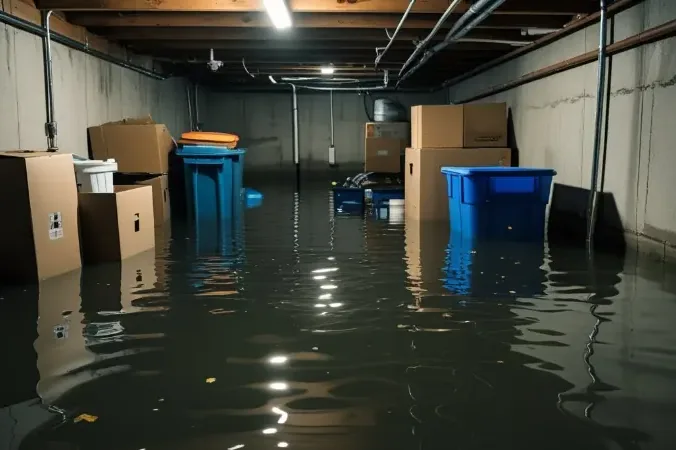
First steps for basement flooding cleanup
- Cut the power safely
Switch off basement circuits only from dry footing, never while standing in water.
- Check the floor drain
Water rising from a floor drain is likely sewage, so keep people and pets out.
- Move what floats
Lift boxes, rugs and electronics off the wet floor.
- Photograph the depth
Capture how high the water reached on walls and furniture.
What does basement flooding cleanup cost in Leawood, KS?
In Leawood, KS, basement flooding cleanup typically runs $2,500 to $12,000, depending on whether the space is finished, the category of water, the square footage affected and how fast drying started. Sewage pushes it to the top of the range.
Unfinished basement
- Extraction from concrete
- Dehumidifiers and air movers
- Daily readings
Finished basement, clean water
- Pad and lower drywall removed
- Framing dried in place
- Containment to the drying zone
Finished basement, sewage or runoff
- Category 3 removal
- EPA-registered antimicrobial
- Full structural drying
Ranges are typical, not a quote: category of water, square footage, material class and how fast drying started move the number most. Run the water damage cost calculator for a closer range.
How basement flooding cleanup is handled, start to finish
Moisture is mapped before any equipment goes down, so the drying plan matches what is actually wet, and the equipment stays until the readings say dry.
Source
The category is set from where the water came in.
Extract
Pumps and extractors clear the floor and carpet.
Open
Small flood cuts reach wet wall cavities.
Dry
LGR dehumidifiers run until readings match dry.
A finished basement holds more absorbent material per square foot than any room in the house: carpet, pad, drywall, insulation, wood framing and stored boxes. When water reaches it, the first question is where the water came from, because that sets what can be dried and what must go.
Where basement water comes from
- Seepage through foundation walls and floor cracks after heavy rain
- A sump pump that fails or loses power during a storm, covered on the sump pump failure cleanup page
- Sewage rising through a floor drain, which is Category 3 and handled under sewage backup cleanup
- A burst pipe, water heater or washer leak on the same level
Basement flooding cleanup in Leawood, KS: extraction from finished lower levels, carpet and pad removal, small controlled flood cuts and structural drying with daily moisture readings.
Basement under water? Get it pumped out nowHow a finished basement is dried
Clean water caught early often lets the crew dry framing and lower drywall in place. Wet pad comes out, carpet is floated and dried, and small controlled flood cuts open wall cavities only where meters show water behind the drywall. Insulation that soaked through is removed.
Concrete floors and foundation walls hold water for days. LGR dehumidifiers inside a closed drying zone pull that moisture out, and readings decide when the drying is done, not the calendar.
Protecting the rest of the house
Basement humidity climbs into the main floor through stairwells and ductwork, so the drying zone is closed off with plastic sheeting and the dehumidifiers work on the wet area. Flood insurance questions start at FloodSmart, and National Weather Service flood safety covers what to do when water is rising.
Basement flooding cleanup across Leawood and nearby Johnson County
The restoration team covers ZIP 66206, 66209 and 66211, from the older streets off Lee Boulevard and Mission Road to Hallbrook, South Lake, Ironwoods Park and the 119th Street corridor near Town Center.
Nearby coverage reaches Prairie Village, Mission, Roeland Park, Merriam, Overland Park, Mission Hills, Lenexa and Kansas City, MO.
Related water damage services
Basement Flooding Cleanup questions in Leawood, KS
Basement Flooding Cleanup help, around the clock
Basement still wet after the pump-out? The drying team finishes the job 24/7.
(888) 902-1696 Dry out the lower levelCan a finished basement be dried without tearing it out?
Often. When the water is clean and extraction starts early, framing and lower drywall can be dried in place through small openings. Pad usually comes out. Sewage changes that.
How long does basement flooding cleanup take?
Extraction takes hours. Drying a finished basement usually takes four to six days, longer for concrete that soaked for days or for walls with insulation behind them.
Is basement flooding covered by homeowners insurance?
It depends on the source. A burst pipe is often covered. Surface water usually needs flood insurance, and sump or sewer backup often needs an endorsement. Check your own policy.
Why does the basement still smell damp after the water is gone?
Concrete, framing and carpet still hold water. Until a dehumidifier pulls it out, humidity stays high and odors linger. Readings show when it is truly dry.
Does the carpet have to come out?
Pad soaked by clean water is usually replaced, and the carpet can often be dried and relaid. Carpet touched by sewage or flood runoff is removed.
What if water keeps coming in during the cleanup?
The source comes first. Seepage may need a sump repair or drainage work by others, and the drying setup is adjusted until the water stops.
Water in a finished basement? Get the cleanup started.
Carpet, pad and drywall in a basement soak through fast. The mitigation team extracts, opens only what is needed and dries the rest.
(888) 902-1696Start the basement cleanup