Water Damage Restoration Roeland Park, KS
When a pipe splits, a storm drives water inside or a drain backs up, the restoration team starts extracting standing water and drying the structure to measured readings, so damage stays smaller.
(888) 902-1696Call for Roeland Park water helpWritten drying readings and photos go with every job, so the claim file holds the same facts the crew saw.
What happens after the call, step by step
- Call and describe
Say what failed, where the water is and whether it is still running. That decides which equipment goes on the truck.
- Stop the source
The crew isolates the supply if water is still flowing and checks for electrical hazards nearby.
- Extract the water
Pumps and extraction wands remove standing water first, since it keeps spreading into pad and drywall until gone.
- Open and dry
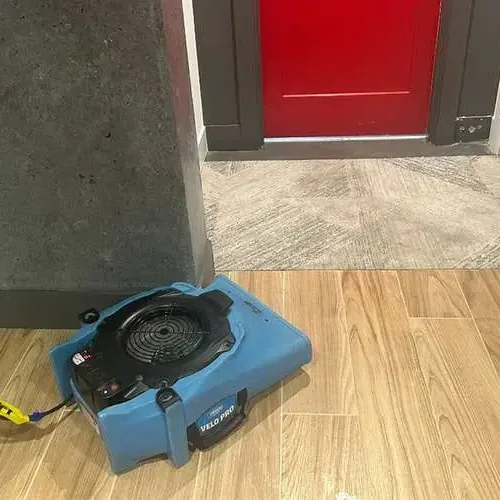
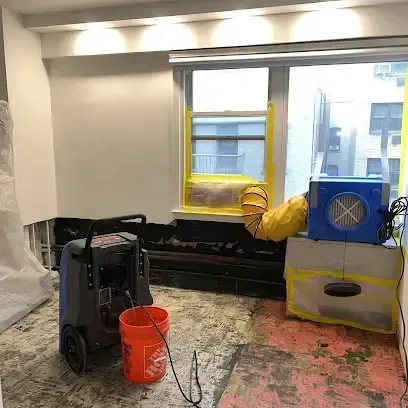
Wet cavities are opened, air movers and dehumidifiers are placed, and moisture readings are logged.
- Confirm dry and document
Readings are repeated until framing and subfloor reach dry targets, and the photos and logs are ready for the claim.
Water damage services for local homes
Each job starts with the water itself: extraction, controlled drying and cleanup matched to what failed, whether that was a pipe, a pump, a roof, a drain or an appliance.
Water Extraction and Removal
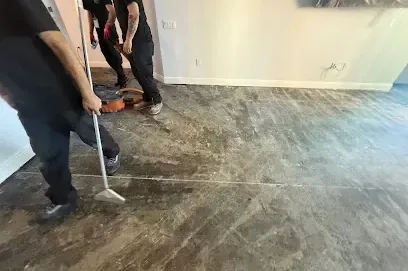
Pumps and wands pull standing water off floors before it wicks into pad, drywall and framing.See the service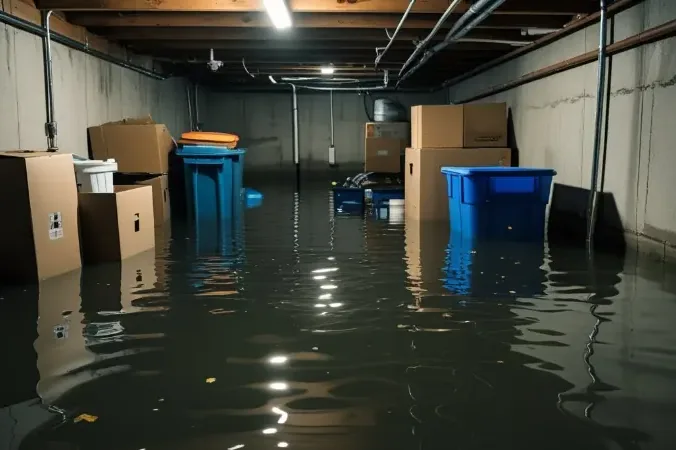
Basement Flooding Cleanup
Flooded lower levels get pumped out, wet carpet and pad come up, and walls dry in place.See the service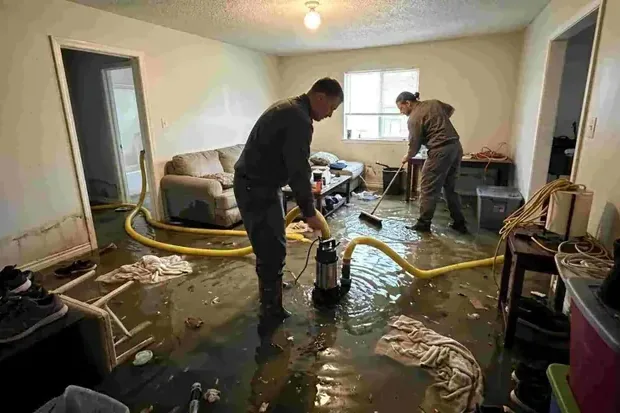
Sump Pump Failure Cleanup
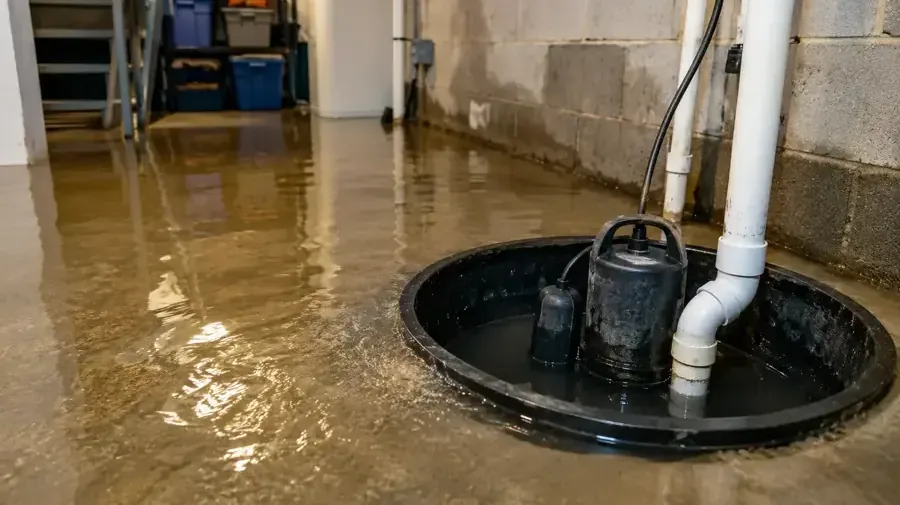
After a pump quits and the pit overflows, water is extracted and the area dried to readings.See the service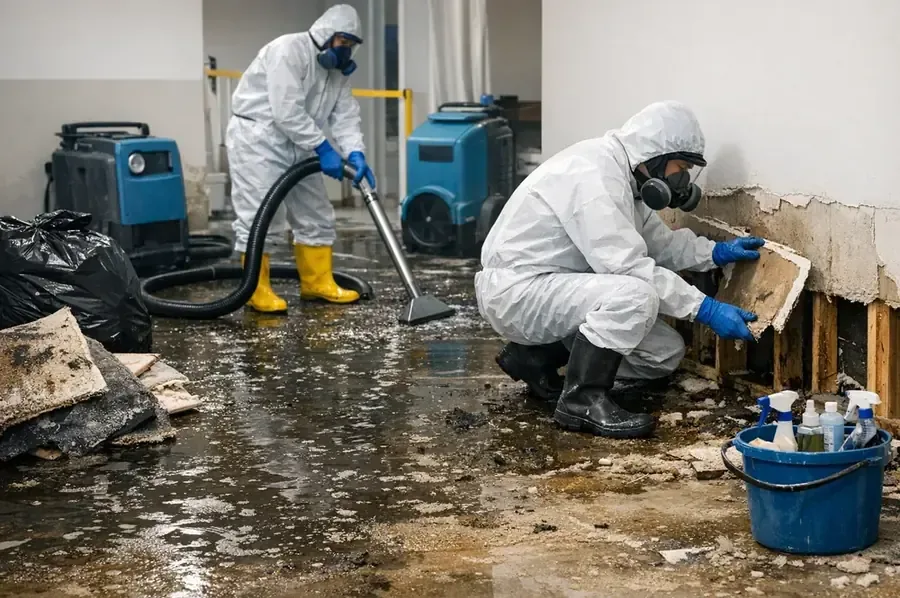
Sewage Backup Cleanup
Backups from a drain or toilet are Category 3, so porous materials come out and the area is cleaned.See the service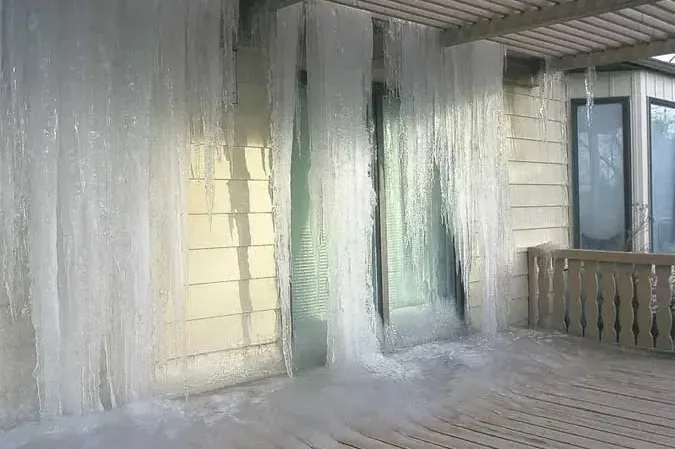
Frozen Pipe Water Damage
Pipes in exterior walls and unheated spaces can split when frozen, so wet cavities are opened and dried.See the service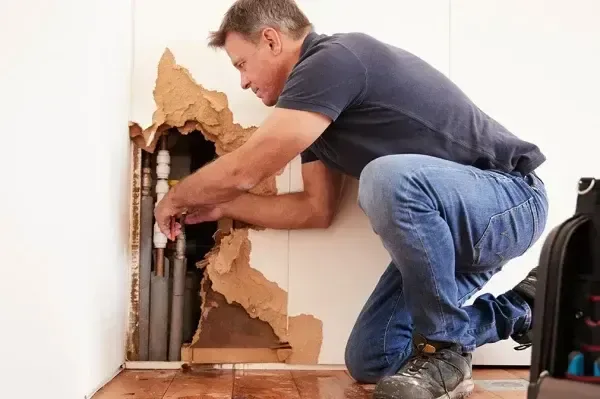
Burst Pipe Water Damage
A failed supply pipe is traced by moisture mapping, then the water is extracted and framing dried.See the service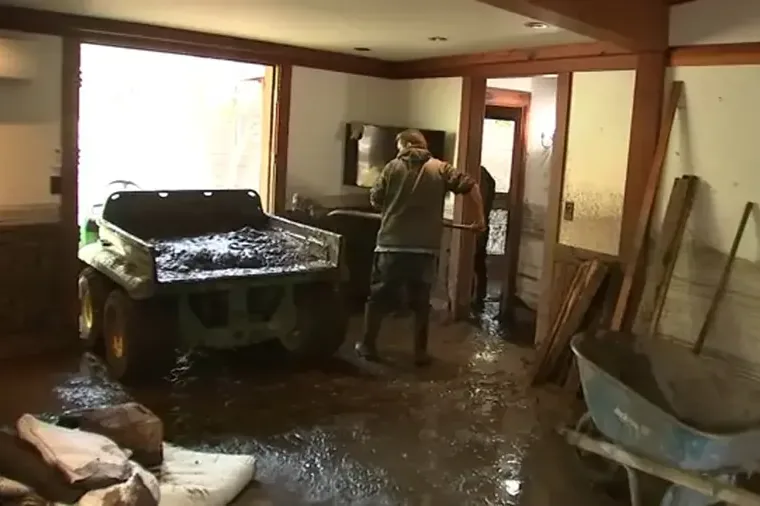
Storm and Flash Flood Cleanup
Storm runoff in the house is pumped out, then floors, walls and contents are cleaned and dried.See the service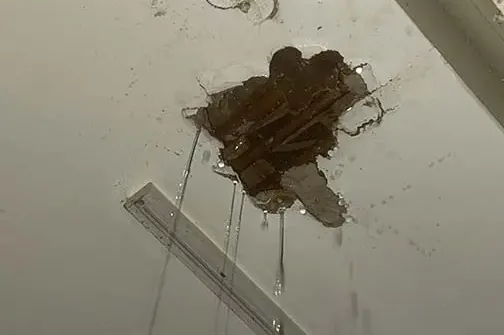
Roof Leak Water Damage
Roof water soaks insulation and shows up in ceilings, so wet material is removed or dried in place.See the service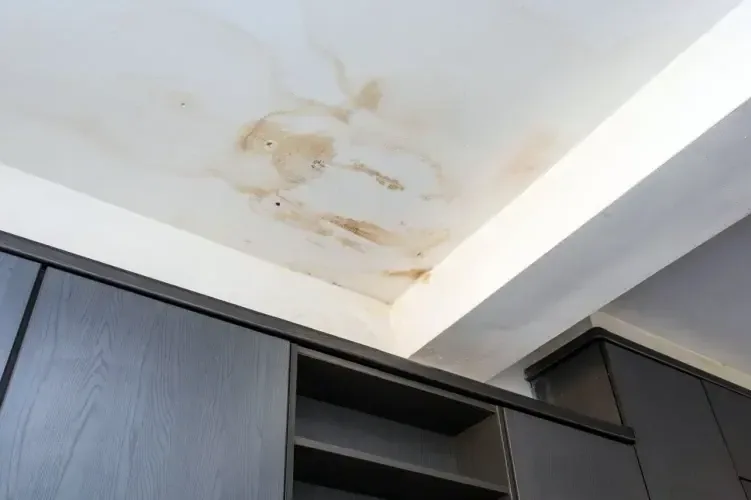
Ceiling Leak Water Damage
A ceiling that stains, sags or drips is opened where needed so the wet cavity above can dry.See the service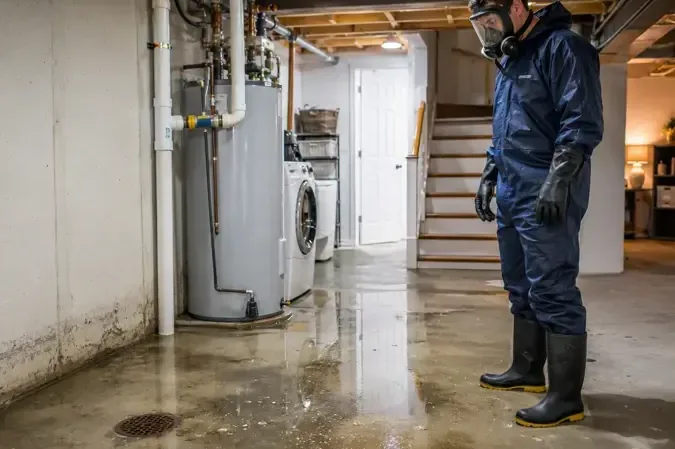
Water Heater Leak Cleanup
A failed tank spreads water across the floor and into nearby wall bases, which are dried to readings.See the service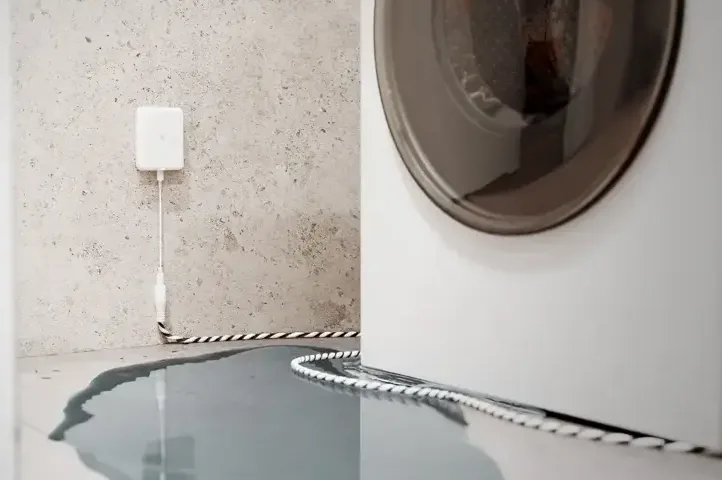
Appliance Leak Water Damage
Washer, dishwasher and refrigerator leaks can run unseen under flooring, so wet floors and cabinet bases are dried.See the service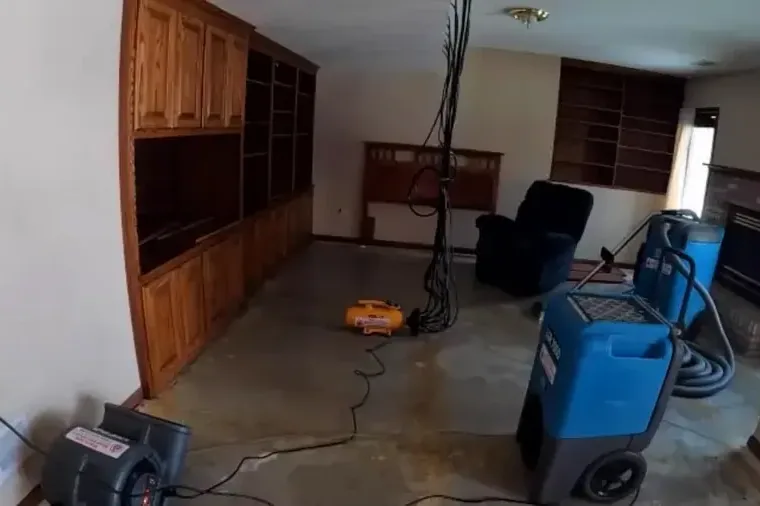
Structural Drying and Dehumidification
Drying runs on readings: equipment placement is planned, then framing and subfloor are checked until dry.See the serviceDrying that is measured, not guessed
Water travels into pad, drywall and framing long before a surface looks wet, so the drying team trusts meters and logged readings over eyesight.
Readings, not guesses
Moisture meters and scanning tools map where water traveled, so drying equipment goes where wet material actually is.
Water only work
Clean water, gray water and sewage are the whole focus, which keeps the equipment and the process specific.
Documented for the claim
Photos, moisture logs and a written scope are kept for every loss, so an adjuster can follow what was done and why equipment stayed.
Open at all hours
Pipes fail at night and on weekends, so the response team works whenever water shows up, holidays included.
Three kinds of losses that shape the work
Frozen pipes
Supply pipes in exterior walls and unheated spaces can freeze and split, flooding wall cavities that must be opened and dried before finishes swell.
See frozen pipe workSump pump failure
A pump that stops during heavy rain lets the pit overflow, and the water has to be extracted before it reaches finished flooring and wall bases.
Read about pump failuresStorm water
Hard rain can leave water behind homes and push runoff indoors, which calls for pumping, cleaning and drying.
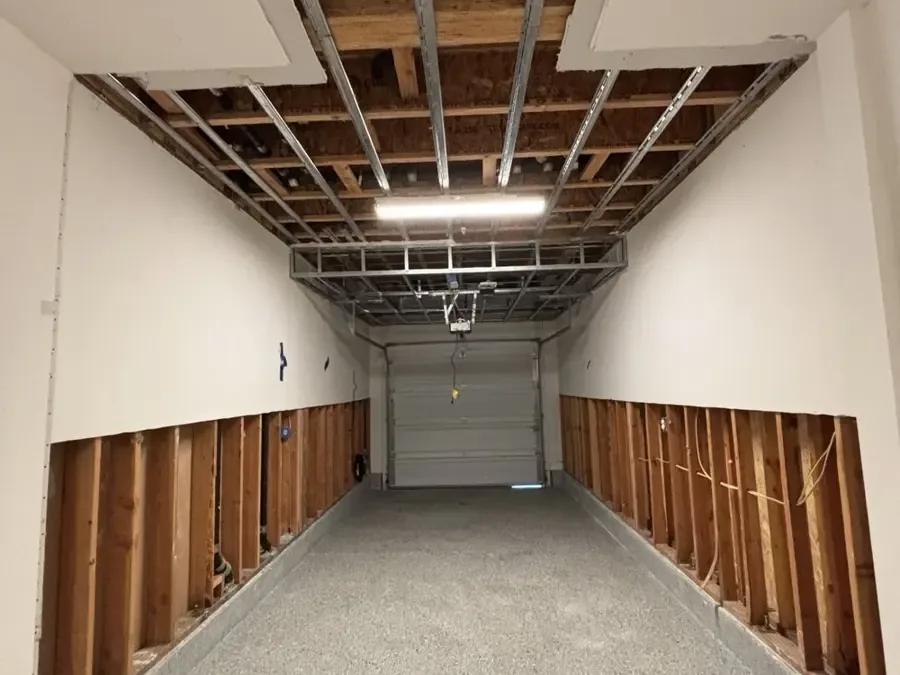
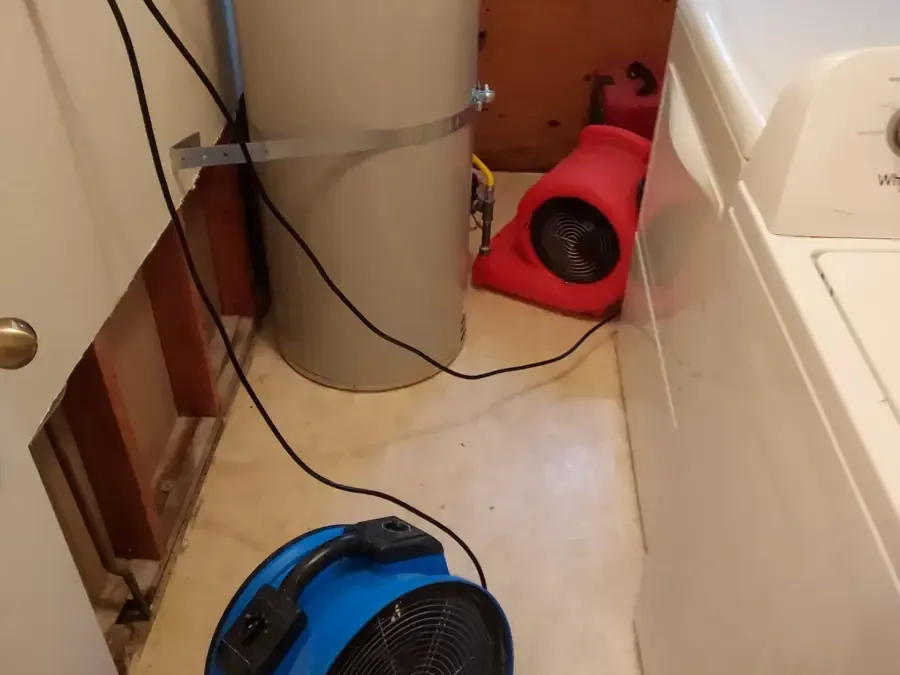
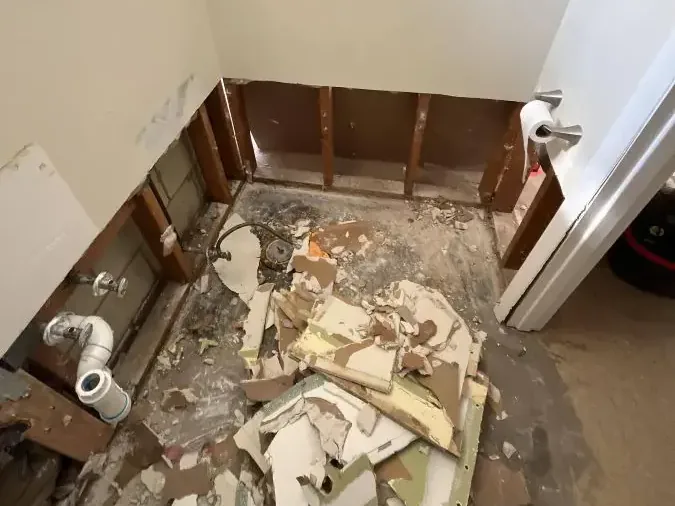
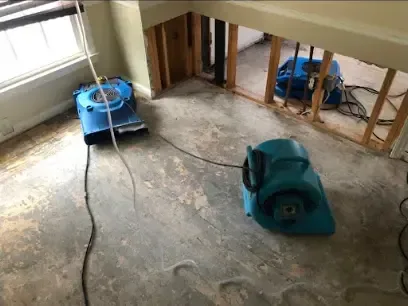
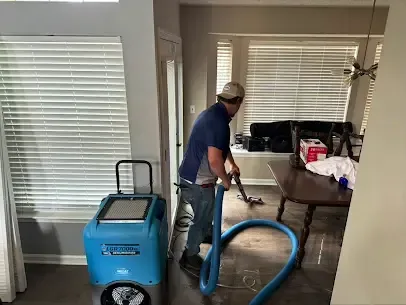
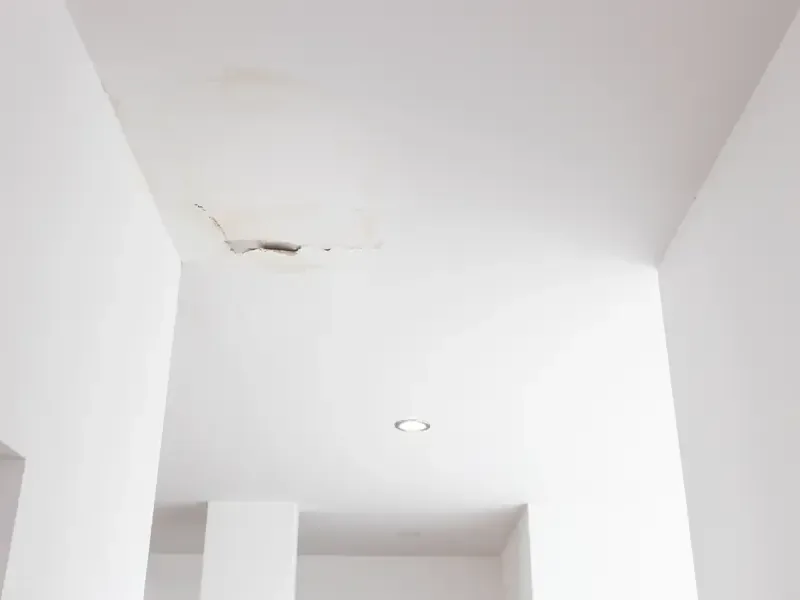
See storm cleanupTypical jobs, from garage walls to ceilings
What water damage cleanup usually costs
Most residential jobs land between $1,200 and $12,000 or more, depending on how many rooms are wet, how long the water sat and whether it was clean water, gray water or sewage.
One room, clean water
- Extraction of standing water
- Air movers and a dehumidifier
- Moisture readings until dry
Finished lower level, clean water
- Pump out and water extraction
- Wet pad and carpet removal
- Wall cavity drying
Finished lower level, sewage or runoff
- Category 3 sewage protocol
- Porous materials removed
- Cleaning and sanitizing
Actual cost follows the moisture readings, the number of rooms involved and the materials that must come out, and the written scope shows each of those items.
A repeatable standard on every loss
Each job follows the same order: stop the source, remove the water, open what is wet, dry with equipment and verify with a meter before anything is rebuilt.
Make it safe
Power near wet areas is checked, the supply is isolated and hazards such as sagging ceilings are flagged before work begins.
Extract
Pumps and wands remove standing water, and a vacuum pass lifts what soaked into carpet and pad.
Dry the structure
Air movers push dry air across surfaces while dehumidifiers pull moisture out of the room, and opened cavities dry alongside.
Verify and record
Meters confirm framing and subfloor are dry, then the readings and photos are saved for the owner and the adjuster.
Photos and readings for your claim
A water loss claim goes smoother when the first photos, the source of the water and the drying readings are all written down at the start.
- Photos of damage before anything is moved
- The source of the water, noted clearly
- Moisture readings from each wet room
- A list of materials removed and why
- Equipment used and the days it ran
Filing the claim on your own
Owners who file on their own can still send the photos, logs and written scope, since adjusters ask what was wet and how it was dried.
Keep damaged materials until the adjuster has seen them or photos prove the loss, unless they are sewage soaked or unsafe to store.
Call now when water is inside the house
Roeland Park counted 6,871 residents and 3,201 households in 2020 across 1.62 square miles, so the response team works in tight quarters.
Tell the team what failed and how far the water has gone, and the right equipment is planned before the truck leaves.
(888) 902-1696Call the response team nowWhere the crews work across Roeland Park
Streets in the area
Nearby towns served
What local pipes and storms have shown
Roeland Park's public record is about stormwater pipes, not home damage claims: metal pipe failures opened sinkholes in 2013 and 2017, and the city later approved a pipe video inspection.
- Pipe failures in 2013. Failed metal pipes opened sinkholes at Elledge Drive and Buena Vista and on Roe Lane close to Roe Avenue, a reminder that underground pipes can give way without warning.
- Summer storms and sinkholes. Storms in the summer of 2017 were followed by new sinkholes in Roeland Park, so heavy rain is worth watching for ground that sinks or water that collects near the house.
- Aging metal and clay pipes. The city said it was especially interested in finding aging metal pipes, which can rust out, and in locating and monitoring clay pipes.
- Unknown pipe condition. In May 2018 the public works director said the condition and material of at least 14,350 feet of the city's stormwater pipes were unknown to the city.
- What it means indoors. None of this points at any one house, but sinking ground, new wet spots or water at the foundation after a hard rain are good reasons to have a drying team check before damp materials stay wet.
September 2017
A failed, corroded section of metal pipe at 57th and Roeland Drive caused two sinkholes in back yards, and the city council replaced it.
Roeland Park water damage questions
Water in the house now?
Turn off the water at the main if it is safe, keep clear of wet outlets and call, so the extraction plan can start.
(888) 902-1696 Call for water help nowHow fast does water damage spread after a leak?
Water wicks into pad, drywall and framing quickly, and wet materials can start growing mold within a day or two, so extraction and drying should begin right away, before the damage reaches the subfloor.
What should be done first when a pipe bursts?
Shut off the supply at the main valve, switch off power to wet areas if it is safe, move valuables out of the water and call a restoration team for extraction. Take photos before anything is cleared, since they help the claim.
How does a sewage backup differ from clean water damage?
Sewage is Category 3 water, which carries bacteria, so porous materials such as carpet, pad and drywall are removed rather than dried, and the area is cleaned and sanitized. Keep children and pets out of the area.
Is a storm flood job handled differently?
Runoff carries soil and contaminants, so affected materials are treated as unsanitary, water is pumped out, and floors and walls are cleaned before drying equipment is set. Drying takes longer when the water sat for a while.
Who decides if wet drywall can stay?
Moisture readings do. Drywall that tests dry after clean water exposure can often stay, while pad, insulation and anything touched by sewage or runoff is usually removed, and the written scope records each decision.
How does anyone know the structure is dry?
Meters check framing and subfloor against readings taken from unaffected material, and the equipment stays in place until the numbers match. Removing it early risks moisture left behind inside the walls.
Do water damage jobs include rebuilding?
The work covers mitigation: extraction, demolition of wet materials, drying and cleaning. Rebuilding finishes such as paint, flooring and trim is separate, and the written scope shows what comes next.
Which kinds of water loss are handled?
Frozen and burst pipes, sump pump failures, sewage backups, storm water, roof and ceiling leaks, water heater and appliance leaks and structural drying are all part of the work. The work stays on water and sewage.
Can a pipe leak hide behind finished walls?
Yes. Supply and drain leaks can run inside walls, under floors and above ceilings for days, so staining, soft trim or a musty smell are reasons to have moisture mapped before more material is lost.
What areas does the crew reach?
The service area covers Roeland Park and its ZIP code 66205, including streets such as Roe Boulevard, Rosewood Drive and Roe Lane, and the crew goes where the water is. Nearby towns are covered too.
When water gets inside, a prompt call limits the damage
Whatever failed, the drying team can begin with extraction and a moisture map, so call at any hour.
(888) 902-1696Call to start the dry out