Structural Drying and Dehumidification in Overland Park, KS
Water that soaks into framing, subfloor and walls stays there until it is pulled out. The drying team uses air movers and dehumidifiers and logs readings until the structure tests dry.
(888) 902-1696Start the drying plan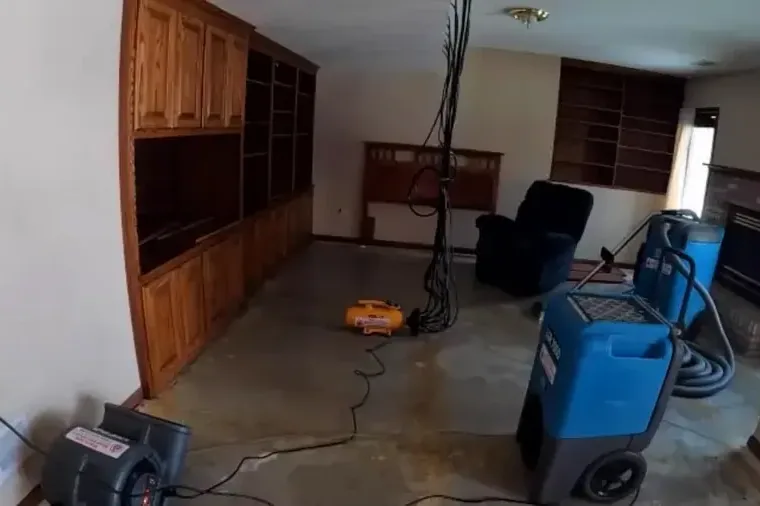
First steps for structural drying and dehumidification
- Classify the loss
The water category and drying class are set from the materials and the wet area.
- Place the equipment
Air movers and dehumidifiers are positioned to cover every wet surface and cavity.
- Monitor each day
Readings are logged and equipment is moved or adjusted as areas dry.
- Confirm and remove
Equipment leaves only after readings match an unaffected room.
What does structural drying and dehumidification cost in Overland Park, KS?
Structural drying costs $1,200 to $3,000 for Class 1 or 2 losses, $3,000 to $5,000 for Class 3, and $5,000 to $7,000+ for Class 4, with equipment days and wet material setting the price.
Class 1 or 2
- Air movers placed
- One dehumidifier
- Daily moisture readings
Class 3
- Walls and ceilings dried
- Several dehumidifiers
- Extended monitoring
Class 4
- Deep material drying
- Drying mats used
- Longest equipment time
Ranges are typical, not a quote: category of water, square footage, material class and how fast drying started move the number most. Run the water damage cost calculator for a closer range.
How structural drying and dehumidification is handled, start to finish
Moisture is mapped before any equipment goes down, so the drying plan matches what is actually wet, and the equipment stays until the readings say dry.
Classify
The water category and drying class are set.
Place
Equipment goes where the moisture is.
Monitor
Readings are logged and equipment adjusted.
Confirm
Readings match an unaffected room.
Drying has to work in both seasons here. In a hot, humid summer the damp outdoor air cannot take moisture from a wet room, so dehumidifiers do the heavy lifting. In a cold, dry winter the air is thirsty, but the equipment has to run in rooms kept warm enough to dry.
Drying classes
Class 1 and 2 losses involve limited wet materials. Class 3 means water came from above and soaked ceilings, walls and carpet. Class 4 covers dense materials such as hardwood and concrete that hold water deep inside.
Structural drying uses air movers, dehumidifiers and daily readings to pull moisture from framing, subfloor and walls until readings fall to those of an unaffected room.
Start the drying planEquipment and monitoring
- Air movers sweep dry air across wet surfaces
- Low grain dehumidifiers pull moisture out of the air
- Drying mats draw water from under hard floors
- Moisture meters and thermal imaging track progress each day
When the equipment comes out
Readings are compared with an unaffected room of the same material. The crew pulls equipment only when framing and subfloor match it, not when surfaces merely feel dry. Standing water has to leave first, as described under water extraction, and flooded lower levels are covered at basement flooding cleanup.
Why a dry surface is not a dry structure
Water hides in the cavity behind a wall and under flooring long after the surface looks fine. Left in place, it feeds odors and mold, which can start within 24 to 48 hours. The crew documents every reading, so the adjuster can see the drying curve from the first day to the last.
Structural drying and dehumidification across Overland Park and nearby communities
Structural drying covers Overland Park, from the Shawnee Mission area north of 159th Street to the blocks near Metcalf Avenue, Shawnee Mission Parkway and Interstate 435, wherever water has soaked into framing or subfloor.
The same service nearby: structural drying and dehumidification in Leawood, Prairie Village, Merriam.
Water damage restoration in Overland Park · every town covered
Structural Drying and Dehumidification questions in Overland Park, KS
Structural Drying and Dehumidification help, around the clock
Walls and floors still damp? Describe the loss and the drying plan can be built.
(888) 902-1696 Get drying answersHow long does structural drying take?
Several days in most homes. Daily readings decide, because thick or dense materials take longer than drywall.
Why not just open windows and run fans?
Fans alone move wet air around. Dehumidifiers remove the moisture, and in a humid summer outside air can add to it.
What are the drying classes?
Classes 1 through 4 rank how much wet material there is and how deep the water sits, from limited wetting to dense materials such as hardwood and concrete.
Will the equipment be loud?
Air movers and dehumidifiers make steady noise and use power, but they run only while the structure needs them.
How does the crew know the structure is dry?
Moisture meters and thermal imaging are compared against an unaffected room of the same materials. Dry means matching it.
Does insurance cover drying?
Often as part of a covered water loss. The daily logs are what many adjusters ask for.
Get the structure fully dry
The drying team works nights, weekends and holidays. Describe the wet areas and the air movers, dehumidifiers and meters can be set up for the whole structure.
(888) 902-1696Dry the structure fully