Structural Drying and Dehumidification in Prairie Village, KS
After the standing water is out, wet framing, subfloor and concrete still hold moisture. Dehumidifiers and air movers pull it out while daily readings track the progress.
(888) 902-1696Building still damp? Start the drying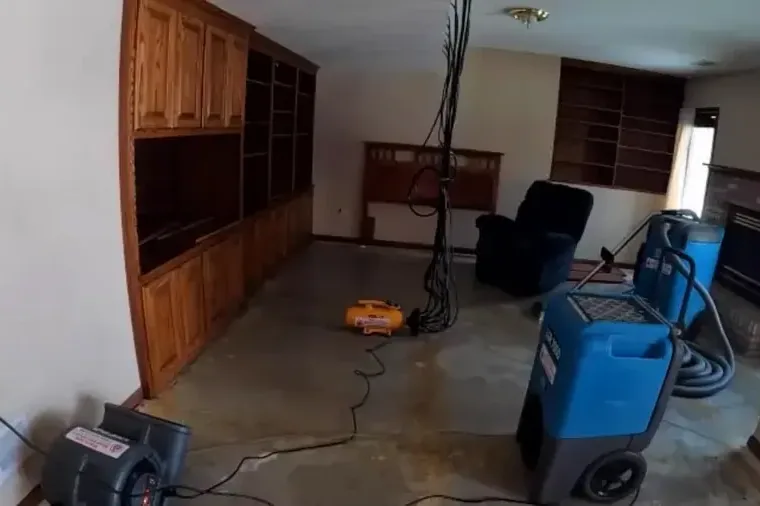
First steps for structural drying and dehumidification
- Let the equipment run
Leave air movers and dehumidifiers on, since stopping them restarts the clock.
- Keep doors closed
Closed rooms hold the dry air where it is needed.
- Keep the temperature steady
A normal indoor temperature helps moisture evaporate.
- Photograph the readings
Snap the meter screens and the equipment on each visit.
What does structural drying and dehumidification cost in Prairie Village, KS?
Structural drying here typically costs from $1,200 to $7,000+. The total follows the drying class, how much concrete and framing is saturated and how many days the equipment has to run.
Class 1 or 2
- Light to moderate wetness
- Air movers and dehumidifiers
- Daily readings
Class 3
- Saturated walls and ceilings
- LGR dehumidifiers
- Flood cuts as needed
Class 4
- Deep concrete and masonry
- Low-grain refrigerant units
- Extended drying run
Ranges are typical, not a quote: category of water, square footage, material class and how fast drying started move the number most. Run the water damage cost calculator for a closer range.
How structural drying and dehumidification is handled, start to finish
Moisture is mapped before any equipment goes down, so the drying plan matches what is actually wet, and the equipment stays until the readings say dry.
Map
Meters find which materials are wet.
Place
Air movers and dehumidifiers go where the map points.
Monitor
Readings are logged daily and equipment is adjusted.
Finish
Equipment leaves once readings match a dry reference.
Taking water off the floor does not make a building dry. Framing, subfloor and concrete hold moisture long after the surface looks fine, and that trapped water is what leads to swelling, odor and mold. Structural drying removes it on purpose, with equipment placed and monitored by the numbers.
Why heavy rain makes this the main job
Basements wet from creek overflow or a sewer backup need drying that reaches framing, subfloor and concrete, not just a quick pump-out. Prairie Village homes saw creek flooding on Mission Road in summer 2017, and in July 2024 the mayor heard of basements taking on water in other areas of the city. That is why drying here is measured and logged, not guessed.
Structural drying and dehumidification for wet framing, subfloors and slabs: equipment placement, daily moisture readings and a final check against a dry reference.
Building still damp? Start the dryingHow the equipment is placed
Air movers push dry air across wet surfaces, dehumidifiers pull the moisture out of the air, and LGR units are used on dense materials like concrete. Placement follows the wet map, not a fixed count. Readings are taken every day, and equipment moves or is added when a spot is slow.
When drying is complete
Drying ends when the readings in wet materials match those of a dry reference in the same building, not when a certain number of days has passed. Class 1 and 2 losses finish sooner, while Class 3 and 4 losses, with saturated materials and deep concrete, take longer. See water extraction for the step before it. Background on indoor moisture comes from EPA indoor air quality and federal flood preparedness tips.
Structural drying and dehumidification across Prairie Village and nearby communities
The drying team works throughout the 66208 ZIP, from Corinth Meadows, Calvin Crest, Somerset Hills, Prairie Fields and Prairie Hills to Town & Country Estates and the homes beside Brush Creek.
The same service nearby: structural drying and dehumidification in Leawood, Mission, Roeland Park.
Water damage restoration in Prairie Village · every town covered
Related water damage services in Prairie Village
Structural Drying and Dehumidification questions in Prairie Village, KS
Structural Drying and Dehumidification help, around the clock
Walls still damp after the pump-out? Drying help runs 24/7.
(888) 902-1696 Begin the measured dryingWhy is drying needed after the water is gone?
Surface water leaves quickly, but moisture stays inside framing, subfloor and concrete. Left there, it causes swelling, odor and growth within about 48 hours.
What are the water damage classes?
Classes describe how much water materials absorbed and how fast it will evaporate. Class 1 is the least, and Class 4 involves deep, dense materials like concrete.
How long does structural drying take?
Most jobs run several days. Concrete and dense framing dry slowest, so readings, not a date on the calendar, decide when equipment can leave.
Is the noise from equipment normal?
Yes. Air movers and dehumidifiers are loud and run constantly, but they are what pulls the moisture out. Turning them off early leaves wet spots behind.
Will the power bill go up while drying?
It will, since several machines run for days. Keeping the equipment log is useful when talking to the insurer.
Can a basement be dried after a sewage backup?
After contaminated materials are removed and surfaces are cleaned, the framing and concrete are dried the same way. See sewage backup cleanup.
Wet framing or concrete? Start measured drying.
Surface water is only half the loss. The mitigation team places equipment by the readings, checks it daily and stops only when the building reads dry.
(888) 902-1696Start the structural drying