Storm and Flash Flood Cleanup in Mission, KS
Runoff from a hard rain carries mud, silt and bacteria into lower rooms, so the crew extracts the water, hauls out the sediment and cleans every surface the flood reached.
(888) 902-1696Call for flood water in the house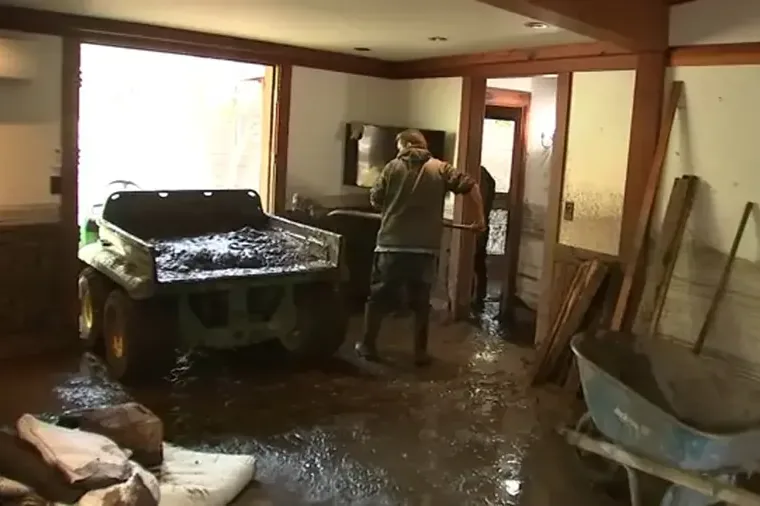
First steps for storm and flash flood cleanup
- Clear the mud
Sediment is shoveled and vacuumed while still soft.
- Pump and extract
Water is removed from floors and carpet.
- Wash and sanitize
Floors and lower walls are cleaned with disinfectant.
- Dry the structure
Dehumidifiers and air movers run until slab and studs read dry.
What does storm and flash flood cleanup cost in Mission, KS?
Storm cleanup cost follows how deep and how wide the water ran and how much mud it left. An unfinished space costs the least, and a finished lower level with silt in the walls costs the most.
Unfinished space
- Concrete and studs
- Mud hauled out
- Floors sanitized
Finished lower level
- Carpet and pad removed
- Lower drywall cut
- Days of drying
Deep or wide flooding
- Several rooms underwater
- Heavy silt cleanup
- Extended equipment run
Ranges are typical, not a quote: category of water, square footage, material class and how fast drying started move the number most. Run the water damage cost calculator for a closer range.
How storm and flash flood cleanup is handled, start to finish
Moisture is mapped before any equipment goes down, so the drying plan matches what is actually wet, and the equipment stays until the readings say dry.
Clear
Mud and debris are removed first.
Pump
Standing flood water is extracted.
Sanitize
Surfaces are washed and treated.
Dry
Equipment runs until readings settle.
Johnson County Wastewater says extremely heavy rains have brought basement flooding to some Johnson County homeowners. The Kansas Floodplain Viewer shows the current effective floodplain, and it points to the FEMA Map Service Center for recent map revisions. The cleanup is the same for any storm that sends water indoors.
Why flood water is treated as dirty
Surface runoff crosses yards, driveways and streets before it reaches a window well or a door, so it carries soil, oil and bacteria. The crew treats it as contaminated, wears protective gear and discards the porous materials it soaked. Contents matter too: upholstered furniture, mattresses and stuffed items that sat in flood water are usually discarded, while solid wood and plastic can be washed and kept.
Cleanup of storm and flash flood water in homes: extraction, mud and debris removal, sanitizing of floors and walls, and structural drying of the lower level.
Call for flood water in the houseMud first, then the water
Silt dries into a crust that traps moisture against the floor, so shovels and wet vacuums remove sediment while it is still soft. Pumps follow, then floors and lower walls are washed and sanitized before drying equipment is set. Window wells and drains near the foundation are worth clearing of leaves and silt, because a clogged well sends the next rain toward the wall.
Checking the floodplain
Homeowners asking about flood coverage can look up an address in the Kansas Floodplain Viewer. The viewer is a lookup tool, not a prediction, and a home outside the mapped floodplain can still take on water from heavy rain. Related lower level work appears under basement flooding cleanup, and equipment details are in structural drying.
Storm and flash flood cleanup across Mission and nearby communities
Storm flooding jobs cover Downtown Mission, the Johnson Drive area and the homes near Broadmoor Park, Mohawk Park and Streamway Park, with the Martway side included in ZIP code 66202.
The same service nearby: storm and flash flood cleanup in Leawood, Roeland Park, Merriam.
Storm and Flash Flood Cleanup questions in Mission, KS
Storm and Flash Flood Cleanup help, around the clock
Water came in with the storm? Describe the depth, the mud and which rooms are affected.
(888) 902-1696 Call the flood cleanup crewIs storm flood water safe to touch?
No. It carries soil, chemicals and bacteria from outdoors, so skin contact is avoided and the crew works in boots, gloves and protective suits.
Can mud be left to dry before cleanup?
Dried silt cakes onto floors and holds moisture against them. It is easier to remove while soft, which is why sediment comes out before the final wash.
What does the county say about heavy rain?
Johnson County Wastewater says some Johnson County homeowners have faced basement flooding caused by sanitary sewer backups during extremely heavy rains.
Does flood damage come under the same claim as a pipe leak?
Policies often handle them separately, so a written note of where the water came from matters before a claim is filed.
Where can homeowners look up floodplain maps?
The Kansas Floodplain Viewer shows the current effective floodplain, and the FEMA Map Service Center holds recently issued map revisions.
Can carpet from a flooded room be cleaned?
Rarely. Flood water soaks the pad and backing, so carpet is usually removed. Hard flooring can be washed, sanitized and dried in place.
Flood water needs more than a mop
Silt and bacteria settle into floors and walls as the water sits. A call starts pumps, sediment removal and sanitizing for the whole lower level.
(888) 902-1696Send the storm crew