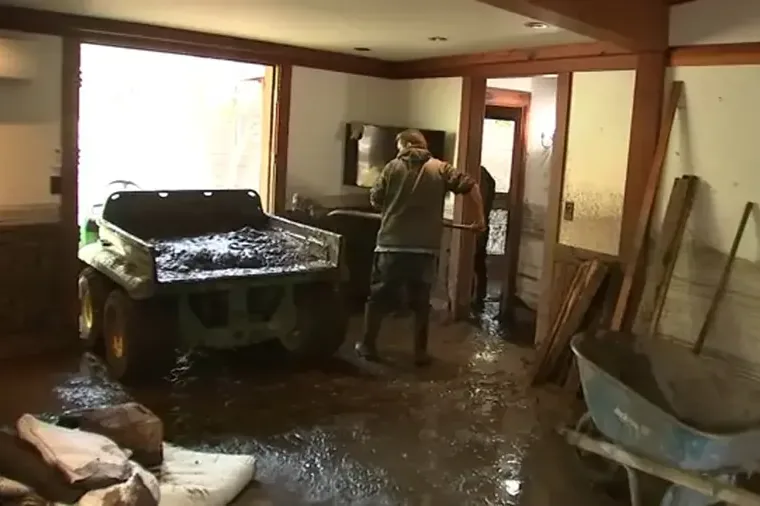
A hard rain can leave water behind a Roeland Park house for several reasons, and only some of them start inside the home. The city's record of failed storm pipes and sinkholes shows why yard water here deserves a second look.
Key takeaways
- Failed metal storm pipes caused sinkholes in 2013 at Elledge Drive and Buena Vista and on Roe Lane close to Roe Avenue.
- Storms in the summer of 2017 were followed by new sinkholes, and in September 2017 the council replaced a corroded metal pipe at 57th and Roeland Drive that had opened two sinkholes in back yards.
- These were public storm pipes, not home plumbing.
- In May 2018 the council moved to approve a video inspection of the whole underground pipe system, because the condition and material of at least 14,350 feet of stormwater pipe were unknown.
- Outside water that enters a house is flood water and is cleaned up as Category 3.
Three sources of water behind a house
Water in a back yard after a storm rarely has a single cause. Sorting the source first tells a household what kind of cleanup it faces.
- Surface runoff: rain that flows across lawns, driveways and patios toward the foundation.
- Public storm pipe trouble: water that surfaces where an underground storm pipe has failed or backed up.
- Home plumbing: a supply leak, an appliance failure or a sump pit overflow inside the house.
A small city where yards sit close together
The 2020 Census counted 6,871 residents in 3,201 households, and the city is small and closely built. In a layout like that, runoff from one lot often crosses another.
Reporting a drainage problem early can protect neighbors as well as the household that first notices it.
Water spreading right now? Shut off the main if it is safe. The restoration team extracts, dries to the IICRC S500 goal and documents every step, 24/7.
Reach the drying team for your homeWhat the city's storm pipe record shows
2013
In 2013, failed metal pipes caused sinkholes at Elledge Drive and Buena Vista and on Roe Lane close to Roe Avenue.
2017
Storms in the summer of 2017 were followed by new sinkholes in Roeland Park.
In September 2017 the city council replaced a failed, corroded section of metal pipe at 57th and Roeland Drive that had caused two sinkholes in back yards.
2018
In May 2018 the public works director said the condition and material of at least 14,350 feet of the city's stormwater pipes were unknown to the city. The council moved to approve a video inspection of the entire underground pipe system.
The city said it was especially interested in identifying aging metal pipes, which can rust out, and in locating and monitoring clay pipes.
What a sinkhole or soft spot means for a household
Each of the events above involved public storm pipes, not home plumbing. The source describes failed metal pipe in the city's stormwater context.
A sunken patch in a yard is a safety problem first. Nobody should stand on it or fill it in.
- Keep children, pets and mowers away from the area.
- Photograph the spot and note where the water is flowing.
- Report it to the city, since the storm pipes in the public system are the city's.
- Check whether water is also reaching the foundation, a window well or a door.
When yard water becomes basement water
Outside water reaches the inside by a short list of routes: window wells, door thresholds, foundation cracks and floor drains. A sump pit that is overrun, or a pump that fails, adds water from below.
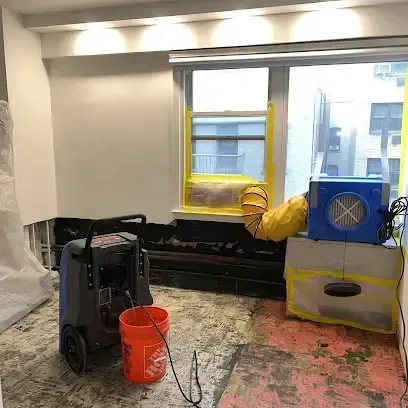
The storm and flash flood cleanup crew traces which route carried the water, so the repairs and the drying plan fit the actual path.
Finished lower levels hide wet drywall behind paint and trim, so moisture mapping is used to find water that cannot be seen.
- Window wells that fill and spill over the sill.
- Door thresholds where water pushes under the weatherstripping.
- Cracks in walls or floors that seep after saturated ground builds pressure.
- Floor drains that back up when the storm system is overloaded.
Extraction, removal and drying
Water extraction starts with the standing water, because it wicks into pad, drywall and framing while it sits.
Carpet and pad that took in outside water are removed. Walls and floors are then dried with air movement and dehumidification until readings match a dry reference, and a finished lower level follows the steps described under basement flooding cleanup.
Hard floors and concrete are cleaned and sanitized, because outside water leaves silt and bacteria behind.
Reading the ground around the house
Most outside water reaches a foundation because of what the ground does near it. A short walk around the house after a storm shows a lot.
- Soil that slopes toward the foundation instead of away from it.
- Downspouts that end at the wall instead of carrying water away.
- Window wells without covers, which fill with rain.
- Low spots in the lawn where water stands after the rain stops.
- Gutters that overflow at the corners.
Questions to ask before cleanup begins
A clear plan makes the work easier to follow and easier to document.
- What category of water is it, and how was that decided?
- Which materials will be removed, and which will be dried in place?
- How and when will moisture readings be shared?
- What happens if a reading stays high?
Documenting a storm loss
A claim after a storm goes better with a clear record, and the best time to build it is while the water is still visible.
- Photos of the yard, the water path and the damage inside.
- The date, the time and the rain conditions.
- Notes on any sinkhole, soft ground or open pipe nearby.
- Receipts for pumping, removal and drying.
Questions
Did the Roeland Park sinkholes come from home plumbing?
The source describes failed metal pipes in the city's stormwater context, which is public infrastructure rather than a house's own plumbing.
What should be done about a sinkhole in a yard?
Keep people, pets and equipment away, photograph it and report it to the city. Filling it in without help can hide a failing pipe below.
Did the video inspection find problems?
The council's May 2018 move to approve it is the confirmed step. Any findings would come from the city.
Is yard water that reaches a basement clean water?
No. Water that has crossed soil, pavement and window wells is flood water, so it is treated as Category 3 and porous materials it soaks are removed.
How is storm water cleaned up inside a house?
The standing water is extracted, wet porous materials come out, hard surfaces are cleaned, and the structure is dried until readings show it is dry.
Why does a closely built city make yard water a bigger issue?
Lots sit near one another, so runoff from one property often crosses the next. A drainage problem reported early can help several households.