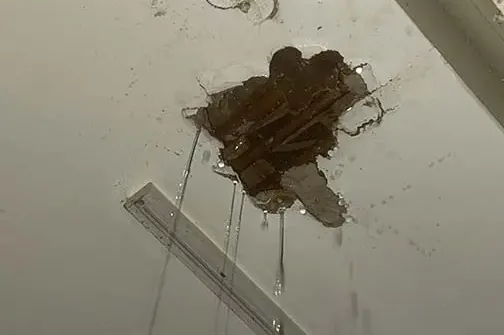
On July 1, 2024, torrential rain dropped about half a foot of water on parts of Johnson County. A storm like that tests every roof, and the weak points often show up as a stain on a ceiling.
Key takeaways
- On July 1, 2024, about half a foot of rain fell on parts of Johnson County.
- The mayor heard of water reaching some basements in other areas of the city that day, so one downpour can cause damage from above and below.
- Roof leaks usually enter at flashing, valleys, vents and gutters, then travel along framing, so the stain is often not under the leak.
- Wet attic insulation is pulled because it holds water against the ceiling, and the cavity is then dried.
- Photos, dates and a dry out record support an insurance claim.
What a half foot of rain does to a roof
Roofs shed water well until they are asked to shed a great deal of it at once. A downpour can overwhelm gutters, push water sideways under shingles and find gaps at flashing.
Intense rain tests the places where one surface meets another.
- Flashing around chimneys, skylights and walls.
- Valleys, where two roof slopes drain into one channel.
- Vent pipes and roof penetrations with worn seals.
- Gutters and downspouts that overflow against the fascia.
Where leaks start on different roofs
Shingle roofs
On a shingle roof, wind-driven rain can slip under lifted or cracked shingles and reach the underlayment. Nail holes and worn sealant make a path too.
Flat and low slope sections
Flat sections drain slowly, so ponded water finds seams and worn membranes. A small crack can pass a lot of water when rain falls hard for a long stretch.
Skylights and chimneys
Skylights and chimneys break up the roof surface and depend on flashing and sealant to stay watertight. Those seals age, and a downpour finds the weak one.
Water spreading right now? Shut off the main if it is safe. The restoration team extracts, dries to the IICRC S500 goal and documents every step, 24/7.
Reach the drying team for your homeWhere the water goes after it gets in
Into the attic insulation
Water that enters at the roof usually lands on insulation first. Wet insulation holds water against the ceiling drywall and loses its insulating value.
Into the ceiling drywall
Drywall stains, sags and then softens. The stain often appears away from the actual leak, because water runs along rafters and ceiling joists before it drips.
Signs a leak is active
Many of these signs show up a day or two after a storm, because insulation and drywall soak slowly.
A stain that dries and then returns after the next rain is a sign that the opening is still there.
- A tan or brown ring that grows after each rain.
- A bulge or sag in the ceiling.
- Drips from light fixtures or vents.
- Peeling paint or bubbling near ceiling corners.
- A musty smell in a closet or upstairs hallway.
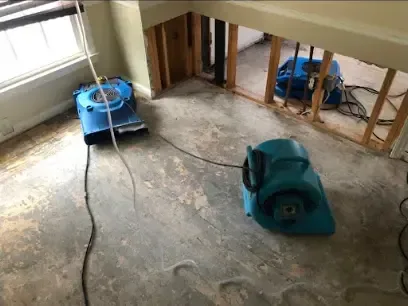
A downpour can reach a house from above and below
The mayor said he heard of water reaching some basements in other areas of the city on July 1, 2024, although not near the Mission Road project.
A heavy rain can cause trouble at the top and the bottom of a house on the same afternoon, so the ceiling and the basement both deserve a look afterward.
First steps indoors
A roof leak water damage response begins with safety and containment.
Cover furniture and floors with plastic if the leak is still active, since water that reaches carpet or hardwood adds to the drying job.
- Move furniture and belongings away from the stain.
- Place a bucket under active drips, and keep people away from a sagging ceiling.
- Switch off power to ceiling fixtures that are wet.
- Photograph the stain, the date and the weather.
- Leave roof work to a roofer unless the surface is safe to reach.
How a wet ceiling is dried
The first job is finding the full wet area with meters, since the visible stain is only part of it.
The mitigation team opens the ceiling where needed, removes wet insulation and dries the cavity with air movement and dehumidifiers. The ceiling leak water damage process ends with readings, not a guess, and structural drying covers the framing above.
A roofer repairs the roof, while the drying team handles the water that already got in.
What a roofer and a restoration team each do
Two different trades solve two different problems after a roof leak, and the work goes best when both start promptly.
- The roofer finds the opening, repairs it and checks flashing, valleys and vents.
- The restoration team extracts water, removes wet insulation and dries the framing and drywall.
- The homeowner documents the damage and keeps both sets of records for the insurer.
Moisture that lingers after the stain dries
A ceiling can look dry on the surface while insulation and framing above it stay damp. Damp materials left in place can grow mold in as little as 24 to 48 hours, so the cavity is checked with meters and not just by eye.
Readings, not appearance, show when the drying is done.
Insurance, photos and temporary repairs
Storm damage claims go more smoothly with clear records. Photographs of the stain, the attic and the roof surface taken before any temporary repair show the original condition.
A tarp or a patch to stop more rain is a reasonable step, and the receipt belongs in the claim file.
- Photograph the ceiling, the attic and the roof before repairs.
- Keep receipts for tarps, patches and drying.
- Ask the insurer whether wind, hail or wear is the likely cause, since policies treat them differently.
- Save the contractor's written findings.
Roof care before the next storm
Small repairs cost less than a ceiling, and a short look after each storm catches most problems early.
A short look after each storm catches most problems early, before a stain ever appears.
- Clean gutters and check that downspouts carry water away from the house.
- Inspect flashing and seals around vents after any hard storm.
- Look in the attic for stains, damp insulation or daylight.
- Replace cracked or lifted shingles before the next heavy rain.
Questions
How much rain fell on July 1, 2024?
Torrential rain dropped about half a foot of water on parts of Johnson County that day.
Why does a ceiling stain show up away from the leak?
Water follows rafters and ceiling joists before it reaches drywall and drips, so the stain can sit a long way from the roof opening.
Does wet attic insulation have to be removed?
Usually yes. Soaked insulation holds water against the ceiling and does not insulate well again, so it is pulled and the cavity is dried.
Who fixes the roof and who dries the ceiling?
A roofer repairs the roof itself. The restoration team extracts water, removes wet materials and dries the ceiling and framing to readings.
Should a bulging ceiling be left alone?
Keep people and belongings away from it, since it holds water and can fall. A restoration team can release and contain the water safely.
How long does a wet ceiling take to dry?
It depends on how much water got in and how many layers were soaked. The team takes readings at each visit and removes equipment only when the framing and drywall match a dry reference.