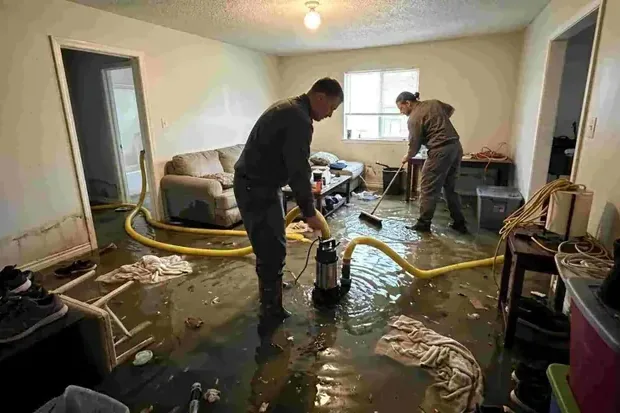
Overland Park averages 40.17 inches of precipitation a year, and May and June are the wettest months. A sump pump that quits in one of those storms can turn a quiet lower level into standing water.
Key takeaways
- May averages 5.41 inches and June 5.22 inches, the wettest months of a 40.17 inch year.
- Turkey Creek, Indian Creek, Tomahawk Creek, Coffee Creek and Wolf Creek cross the city, so heavy rain moves fast through the storm system.
- A pump fails from power loss, a stuck float, a clogged discharge or age, and every cause leaves the same wet floor.
- Water from a sump pit can carry soil and bacteria, so wet porous materials are usually removed rather than saved.
- Johnson County's Contain the Rain program funds city rebates of up to 50% of the cost of rain barrels and rain gardens, which cut runoff.
Why late spring tests a sump pump
Overland Park averages 40.17 inches of precipitation a year. May is the wettest month at 5.41 inches, with June next at 5.22 inches.
Turkey Creek, Indian Creek, Tomahawk Creek, Coffee Creek and Wolf Creek cross the city, and storm drains carry heavy rain toward them. When the ground is saturated, more water reaches foundation drains and sump pits.
Rain that falls on saturated ground has nowhere to soak in, so more of it runs toward the lowest point of a lot.
A pump that works well in a dry week can fall behind in a storm. That is why late spring is when a weak pump is most likely to be found out.
How a sump pump fails
Each cause ends the same way, with water rising out of the pit and across the floor.
- Power loss: storms often take out electricity just as the pit fills.
- A stuck float: the switch cannot rise, so the pump never starts.
- A clogged intake or discharge: silt, gravel or a kinked or frozen hose blocks the water.
- An old motor: pumps wear out and quit under load.
- Too much water: even a healthy pump can be outpaced by a heavy storm.
Water spreading right now? Shut off the main if it is safe. The restoration team extracts, dries to the IICRC S500 goal and documents every step, 24/7.
Reach the drying team for your homeA pre-season sump pump check
Test the float and the pump
Pour a few buckets of water into the pit and watch the pump start, empty the pit and shut off. A pump that hesitates, hums without moving water or fails to shut off needs service.
Check the discharge
Follow the discharge pipe outside and make sure it is clear, points away from the house and is not kinked or buried. A discharge that drops water next to the foundation sends it straight back to the pit.
Plan for power
A battery backup runs the pump from a separate battery during an outage. Some homes add a second pump to share the load in a heavy storm.
Signs a pump is already failing
A pump that gives these signs in a dry week will not last through a wet month, and replacing it early costs less than cleaning up after it quits.
- Loud grinding, rattling or humming from the pit.
- A pump that cycles on and off far more often than it used to.
- Rust, corrosion or sludge around the pump.
- A pump that runs without moving any water.
- Water in the pit that never drops to the shutoff level.
What to do when the pit overflows
Safety comes first. Standing water around outlets, a panel or a running pump can carry current.
The sump pump failure cleanup team can begin pumping and drying while a plumber or electrician works on the pump itself.
- Keep out of the water until the power to the area is confirmed off.
- Move valuables, boxes and electronics off the floor.
- Photograph the pit, the water and the damage.
- Note when the storm began and when the pump stopped.
- Keep children and pets away from the wet area.
Extraction, removal and drying
Pulling the water
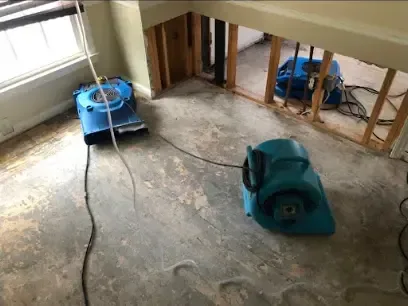
Water extraction clears the floor and the area around the pit, using pumps and wet vacuums.
Floor drains and the sump pit area get a close look, since water that came from a pit can leave silt behind.
What gets removed
Water from a pit can carry soil and bacteria from the drain tile, so wet carpet, pad and low drywall are usually removed rather than saved. Hard floors and concrete are cleaned.
Drying the lower level
Drying equipment stays in place until concrete, framing and subfloor read dry. The full process for a flooded lower level is covered under basement flooding cleanup.
Damp materials left in place can grow mold in as little as 24 to 48 hours, so drying should not wait.
Insurance and records after a pit overflow
Policies treat sump pump overflow differently from other water losses, and some require a separate water backup endorsement. The wording of the policy decides what is covered, so reading it before storm season avoids surprises.
Notes made during the loss help whichever way a claim goes.
- Photos of the pit, the pump and the water on the floor.
- The date, the time and the rain conditions.
- A record of any recent pump service or replacement.
- Receipts for pumping, removal and drying.
Cutting the load on a sump pump
Johnson County's Contain the Rain program launched in 2011 and funds city rebate programs that reimburse residents up to 50% of the cost of rain barrels and rain gardens. Both slow runoff before it reaches the foundation.
The county also advises residents not to rake leaves into storm drains or the street, because leaves in storm drains can clog pipes and cause street flooding. The basement flood risk check turns these items into a short checklist.
Gutter and downspout upkeep keeps roof water from joining groundwater around the foundation.
- Keep downspouts discharging well away from the foundation.
- Test the pump by pouring water into the pit before the wet months.
- Consider a battery backup for storm outages.
- Keep storm drains near the home clear of leaves.
Questions
Which months are wettest in Overland Park?
May is the wettest at 5.41 inches, with June next at 5.22 inches. Average annual precipitation is 40.17 inches.
Does a sump pump failure mean the creek flooded?
Not necessarily. A pit can overflow because of power loss, a stuck float or a clogged discharge, even when no creek is out of its banks.
What does the Contain the Rain program pay for?
It funds city rebate programs that reimburse residents up to 50% of the cost of rain barrels and rain gardens. The program launched in 2011.
How soon does wet carpet need attention?
Soon. Damp carpet and drywall can grow mold in as little as 24 to 48 hours, so extraction and drying start as early as possible.
Is sump pit water clean?
No. It can carry soil and bacteria from the drain tile, so wet porous materials are usually removed rather than dried and kept.
What is a battery backup for a sump pump?
It is a second power source, usually a battery, that runs the pump when the electricity fails. It matters most in storms, which are the moments when outages and heavy inflow tend to arrive together.