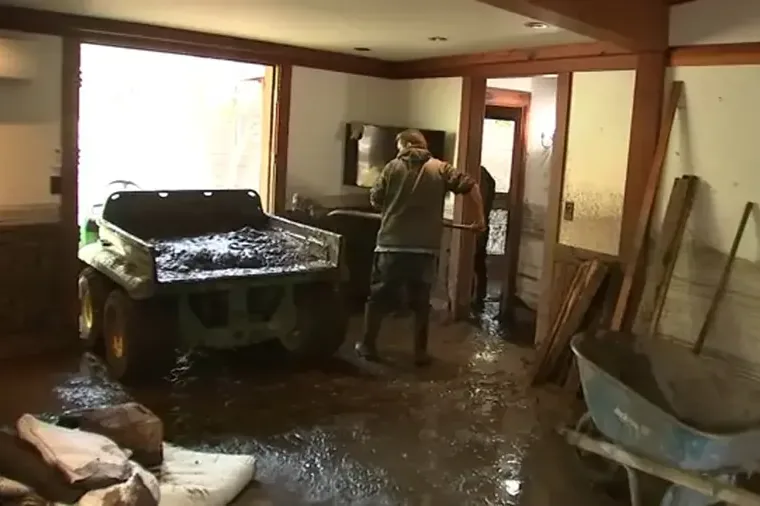
Upper Turkey Creek runs along the border of downtown Merriam, past Merriam Marketplace and Werner Park, and the stretch remains in a flood zone. For owners of older storefronts there, a wet floor is part flood planning and part building care.
Key takeaways
- Upper Turkey Creek in downtown Merriam remains in a flood zone, and local businesses still pay for federal flood insurance.
- The last time water left the creek banks downtown was the 1998 flash flood; before that it flooded several times a decade.
- Downtown has 77 potential flooding locations, the most of any project area in Watershed 1, with a flood risk score of 4.86 where 5 is the highest.
- Flood water is Category 3, so wet drywall, baseboard and flooring are usually removed, while hard surfaces are cleaned and dried.
- Photos, a loss log and drying readings protect both the building and the claim.
Why this stretch of the creek is watched
A fast, urban creek
The Turkey Creek watershed is mainly urban and suburban, with a large percentage of impervious surface that raised peak flows and velocities.
Per the Johnson County watershed master plan, the watershed in northeast Johnson County is entirely urbanized and has been fully developed from the 1950s and 1960s onward. Development brought channel straightening to follow Interstate 35, overbank filling and concrete lining.
A channel that is maintained
The Merriam Drainage District maintains the Turkey Creek channel within its boundaries. Annual inspections found stacked rock walls being undermined by erosion, and engineers designed nine rigid weir grade control structures to stabilize the creek bed.
The buildings along the creek
Downtown Merriam is largely industrial and is also home to small businesses such as restaurants and musical instrument shops. Buildings are row-style and stand-alone, and many were built in the early 20th century.
The historic downtown stretch in the flood study runs roughly between the Johnson Drive and Merriam Drive bridges, and it includes the marketplace and the site of the former Irene B. French Community Center.
Older buildings often hold layers of flooring, wall finishes and trim, so water can travel and hide before anyone sees it.
- Baseboards and wall bases that stain or swell.
- Floor coverings that lift or smell musty.
- Stock and records stored low to the ground.
- Back rooms and low storage areas, which collect water first.
Water spreading right now? Shut off the main if it is safe. The restoration team extracts, dries to the IICRC S500 goal and documents every step, 24/7.
Reach the drying team for your homeWhat the flood plan means for owners
The city and the U.S. Army Corps of Engineers have worked on Turkey Creek flood risk mitigation for nearly 25 years. The Army Corps plan from 2015 calls for levees and berms, utility relocations and road changes, aiming to take the area out of the 100-year floodplain.
In 2022 the city secured $24 million in federal funds for the plan, and the project entered its design phase. In June 2025 the city council was weighing the plan against alternatives that would raise downtown land out of the 100-year floodplain, and no final decision had been made.
None of that changes what an owner does when water arrives. Until the area is out of the floodplain, the creek is treated as an active risk.
The first day after water enters a storefront
A storm and flash flood cleanup crew can start extraction while the owner handles the insurer, the landlord and the staff.
Time matters for porous materials, so extraction starts as soon as the area is safe to enter.
- Keep staff and customers out until power to the wet areas is confirmed off.
- Photograph the water mark, the stock and the floor before anything moves.
- Lift inventory and records onto shelves or tables, and set wet items apart.
- Notify the insurer and ask what coverage applies to flood water.
- Note the time the water arrived and what the creek was doing.
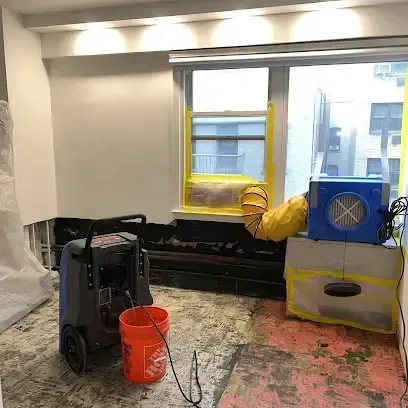
Extraction, removal and drying in a shop
Extraction
Water extraction comes first, because standing water keeps soaking into floors and wall bases. Portable pumps and extractors reach corners that larger equipment cannot.
Removal
Category 3 flood water means soaked baseboard, lower drywall, insulation and floor coverings are usually removed, since they cannot be cleaned reliably.
Structural drying
Structural drying places equipment room by room, with moisture readings taken daily to show progress. The goal is a reading at or near that of a dry reference spot, not a set number of days.
A pre-loss plan for a downtown shop
Owners in a flood zone do better with a plan written before water arrives. A short written plan saves confusion on a stressful day.
- Keep inventory, equipment lists and lease copies in a digital file stored away from the shop.
- Photograph the premises while dry, including floors, walls and stock areas.
- Store records, electronics and fragile stock above floor level.
- Know where the water and power shutoffs are, and who may operate them.
- Ask the insurer how flood damage and lost business are covered, since the answers differ by policy.
Landlords, tenants and neighbors
In row-style buildings, water in one unit can reach the next. Owners and tenants who agree on roles beforehand avoid delays during a dry out.
The building owner, the tenant and the insurer each have a stake in the same set of photos and readings, so sharing the file early keeps everyone working from the same facts.
- Decide who contacts the restoration team and who talks to the insurer.
- Share photos and moisture readings with every party.
- Tell neighboring units when water is moving through shared walls or floors.
Keeping the doors open during a dry out
A phased dry out lets part of a shop reopen sooner, because equipment moves from finished areas to wet ones as readings drop.
Business owners should keep a record of closed days, moved stock and extra costs, since a claim often asks for them.
- Ask the drying team for a plan by area, not just for the whole shop.
- Keep receipts for pumping, removal and equipment.
- Photograph each stage so the claim file shows the full sequence.
Questions
Is the downtown stretch still in a flood zone?
Yes. Upper Turkey Creek in downtown Merriam remains in a flood zone, and local businesses still pay for federal flood insurance.
When did Upper Turkey Creek last leave its banks downtown?
The last time was the 1998 flash flood. Before that, it flooded several times a decade.
What does the Army Corps plan include?
The plan from 2015 calls for levees and berms, utility relocations and road changes, aiming to take the area out of the 100-year floodplain. In June 2025 the council was still weighing it against alternatives.
How does flood water change the cleanup?
Flood water is Category 3, so it carries contamination from the creek and street. Porous materials it soaks are removed, and hard surfaces are cleaned before drying.
Can a business stay open during drying?
Often part of it can. Drying is done area by area, and finished areas can reopen once readings and cleaning are complete.
Does the flood plan mean downtown buildings will come down?
No such decision has been stated. In June 2025 the council was weighing the Army Corps plan against alternatives that would raise downtown land out of the 100-year floodplain, and no final decision had been made.