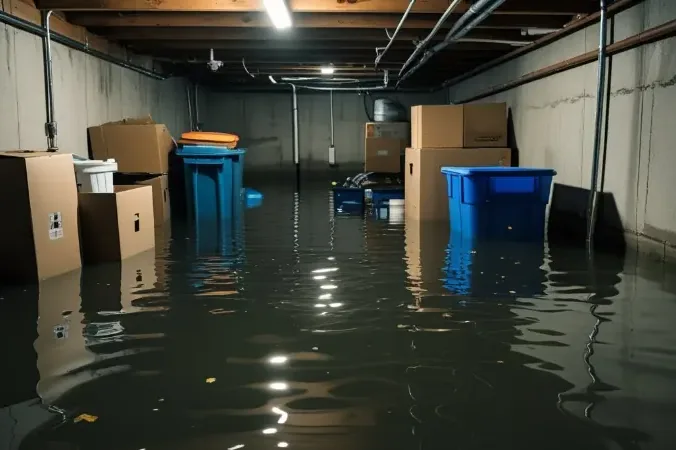
On Mission Road near 68th Street, a short, hard rain can lift Brush Creek water over the pavement and send it toward basements. The road's flood history explains why that water is handled as flood water, not as a clean leak.
Key takeaways
- Mission Road between 67th Street and Tomahawk Road runs parallel to Brush Creek, and the road has a natural low spot at 68th Street.
- For decades, floodwater has risen over the road and into basements when a lot of rain falls in a short time.
- Creek and street water is Category 3, so wet carpet, pad and low drywall are removed instead of saved.
- The $4.4 million Mission Road flood control project, finished in spring 2024, raised the road by nearly five feet.
- A flooded basement is handled in order: pump out the water, remove what cannot be saved, then dry concrete and framing to readings.
Why water gathers on Mission Road
Mission Road between 67th Street and Tomahawk Road runs parallel to Brush Creek. Local news places the Shops of Prairie Village along the same stretch.
The road has a natural low spot at 68th Street. For decades, floodwater has risen over the road and into basements when a lot of rain falls in a short time.
Many homes along the Mission Road stretch near 68th Street are in a floodplain, so the risk is a known part of living or working there.
- The dip in the road at 68th Street is where water collects first.
- A short, heavy rain matters more than a long, light one, because the creek and the street fill faster than they drain.
- Basements are the lowest rooms in a house, so they take the water that crosses a yard, a driveway or a window well.
What the flood history shows
Summer 2017
Heavy flooding along Mission Road in the summer of 2017 inundated homes along 68th Street.
A resident whose own basement flooded rescued three people whose cars became stuck in the floodwater.
The 2024 flood control project
The city wrapped up the $4.4 million Mission Road flood control project in spring 2024. It raised the road by nearly five feet between 67th Street and Tomahawk Road, and it added retaining walls along Brush Creek and new sidewalks.
The Johnson County stormwater management program paid half of the project. The work also removed the parking lot at Schliffke Park, south of Village Presbyterian Church.
July 1, 2024
Torrential rain dropped about half a foot of water on parts of Johnson County, and city officials said the Brush Creek channel performed well.
The mayor said he heard of water reaching some basements in other areas of the city, but not near the Mission Road project.
Water spreading right now? Shut off the main if it is safe. The restoration team extracts, dries to the IICRC S500 goal and documents every step, 24/7.
Reach the drying team for your homeWhy creek water is not treated like a pipe leak
A supply pipe leak starts as clean water. Creek and street water has crossed pavement, yards and window wells before it reaches a basement, so it can carry soil, bacteria and debris.
That is why the restoration team classes it as Category 3 flood water from the start. Porous materials that soak it up are removed, not dried and kept, and the rules for homes in this area follow the same logic as storm and flash flood cleanup anywhere.
- Carpet and pad are lifted and discarded.
- Drywall is cut above the wet mark, and wet insulation comes out.
- Concrete, framing and other hard surfaces are cleaned and sanitized before drying begins.
- Stored boxes, rugs and upholstery are sorted, with a clear plan for what can be cleaned and what cannot.
The first steps in a flooded basement
Safety comes before cleanup. Water and electricity do not mix, so nobody wades into a basement where outlets, the panel or appliances sit under water.
Johnson County tells people with water in a basement, home or business to contact their city. A basement flooding cleanup crew can begin the pumping and drying while that contact is made.
- Stay out of standing water until the power is confirmed off.
- Photograph the water mark, the damaged items and the street conditions before anything moves.
- Lift valuables off the floor and keep children and pets out of the area.
- Write down when the water arrived and what the weather was doing.
How pumping, removal and drying work
Pumping first
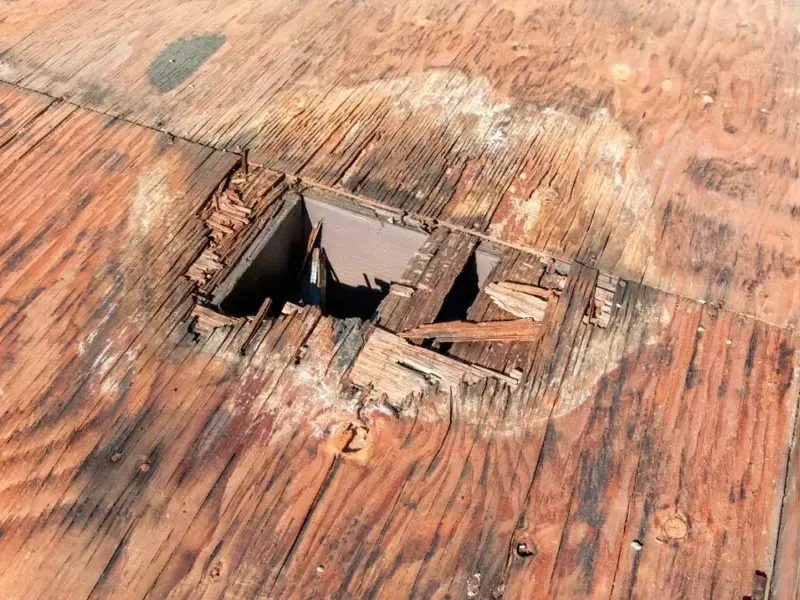
The extraction crew starts with the standing water. Water extraction with pumps and wet vacuums pulls the bulk of it out before it soaks deeper into pad, drywall and framing.
Removal and cleaning
Once the water is out, the team removes what cannot be saved and cleans the hard surfaces. The floor drain and the sump pit are checked too, since a drain that backed up changes the cleanup.
Drying to readings
Drying equipment stays in place until moisture readings in the concrete, framing and subfloor match a dry reference room.
Wet drywall and carpet left in place can start growing mold in as little as 24 to 48 hours, which is why drying begins early instead of waiting for a dry week.
Planning for the next heavy rain
The 2024 project changed the road, but it does not make a basement waterproof. A downpour can still send water into low rooms by way of window wells, doors and sump pits.
Local water damage experts suggest a short routine before storm season.
- Test the sump pump and check that a battery backup is working.
- Clear window wells and make sure downspouts carry water away from the foundation.
- Keep valuables and records on shelves, not on the floor.
- Read the homeowners policy wording on flood and backup coverage, since creek flooding and a burst pipe are often treated differently.
Questions
Did the 2024 project end basement flooding on Mission Road?
The project raised Mission Road by nearly five feet and added retaining walls along Brush Creek, and city officials said the channel performed well during the July 1, 2024 rain. A project on the road cannot close every path water takes into a basement, so preparation still matters.
Is creek water in a basement treated differently from a pipe leak?
Yes. Creek and street water is Category 3 because of what it picks up on the way in, so porous materials it soaks are removed. A clean supply leak can often be dried in place.
Who should be contacted first when a basement floods?
Johnson County tells people with water in a basement, home or business to contact their city. The restoration team can start pumping and drying at the same time, and the insurer should hear about the loss soon after.
Can wet carpet be saved after flood water?
Usually not. Carpet and pad that soaked up Category 3 water are removed, because cleaning cannot reliably make them safe again.
Why take photographs before cleanup starts?
Photos of the water mark, the damaged items and the standing water show what the loss looked like. They support the claim after the materials have been removed.