Johnson County Wastewater says some Johnson County homeowners have faced basement flooding caused by sanitary sewer backups during extremely heavy rains. The county runs a voluntary Backup Prevention Program, and knowing what it covers helps a household separate the plumbing fix from the cleanup.
Key takeaways
- The program is voluntary and funds eligible homeowners to install a backup prevention device or make plumbing modifications on their property.
- A home must be inside the Johnson County Wastewater service area, have had a confirmed sanitary sewer basement backup from an intense rain event, and show that the backup came from capacity problems in the sanitary sewer system.
- A device will not fix lateral problems such as roots, cracks or a broken pipe, or basement water from wall or floor cracks, window well leakage or surface water.
- Applications start with a web questionnaire, and funding follows the lowest of at least two written plumbing estimates.
- Cleaning up the backup itself is a separate Category 3 job.
What the program is
The Backup Prevention Program is voluntary. It funds eligible homeowners to install a backup prevention device or make plumbing modifications on their property.
The county offers it to eligible homeowners inside the Johnson County Wastewater service area. Whether a particular address falls inside that area is something the county decides, not something to assume.
Some homeowners first learn about the program only after a bad storm, which is why reading the conditions before the next one helps.
Who qualifies
Johnson County Wastewater sets three conditions.
- The home is inside the Johnson County Wastewater service area.
- It had a confirmed sanitary sewer basement backup from an intense rain event.
- The backup was a direct result of capacity problems in the sanitary sewer system.
Water spreading right now? Shut off the main if it is safe. The restoration team extracts, dries to the IICRC S500 goal and documents every step, 24/7.
Reach the drying team for your homeHow an application moves
The questionnaire
Applications begin with the Sanitary Sewer Backup Response Questionnaire, completed on the web. After that, the county checks several things.
- Whether the property is in its service area.
- Whether it is in a flood-prone area.
- Whether neighbors also have sewer backups.
- Whether it has a record of cleaning and televising the public sewer.
Estimates and permits
Eligible homeowners gather written estimates from at least two plumbing contractors, and funding follows the lowest comparable estimate.
The contractor is responsible for all permits and city inspections.
What the program does not fix
Johnson County Wastewater is clear about the limits. A backup device or plumbing modification will not fix sanitary sewer service lateral issues such as roots, cracks or a broken pipe.
It also will not fix basement water caused by cracks in walls or floors, window well leakage or surface water flooding.
Those other sources matter for cleanup too, since a seep through a wall, a window well leak and a sewage backup fall into different water categories. A basement flooding cleanup team starts by finding which one it is facing.
- Roots in the service pipe.
- Cracks or a broken pipe between the house and the public sewer.
- Seepage through cracks in basement walls or floors.
- Water that leaks through a window well.
- Surface water that flows into the house.
Signs a backup is coming from the sewer
A backup tied to a heavy rain event looks different from a clog that affects only one fixture in the house.
These signs point toward a sewer-side problem, though only a plumber with a camera can confirm it.
- Water rises in the lowest drain first, such as a basement floor drain or a shower.
- Several fixtures gurgle or drain slowly at the same time.
- A foul smell comes from a floor drain.
- The backup follows a heavy rain.
- Neighbors report the same problem.
Questions worth asking a plumber
The county's process leans on records, so the plumber's work feeds into the application and into any insurance claim.
- Can a camera inspection show whether roots or cracks are in the service pipe?
- Does the problem sit on the home's side of the connection or beyond it?
- What would a backup prevention device involve, and which permits apply?
- Can the estimate be written so it can be compared with a second one?
Cleaning up after a sewage backup
The program is about preventing the next backup. The wet basement from the last one is a separate job.
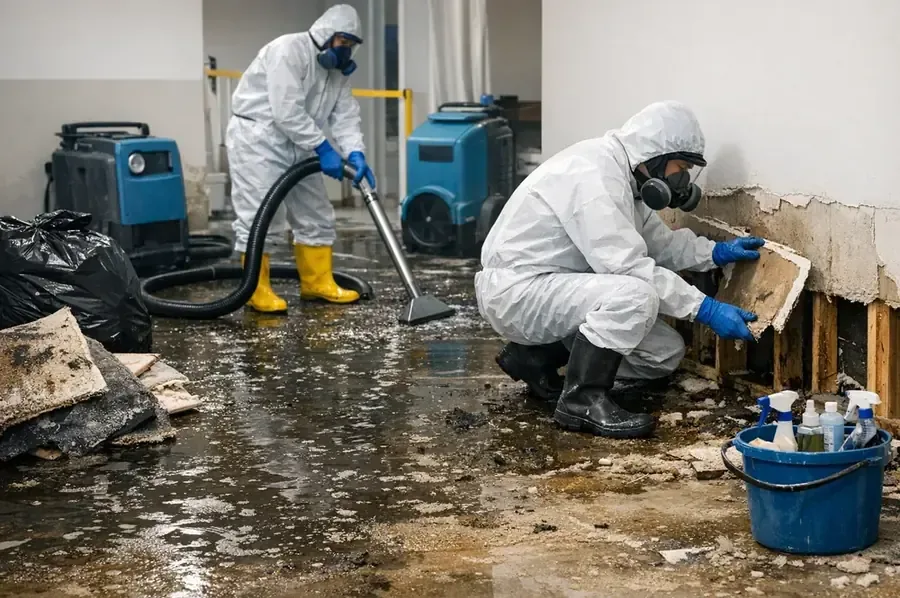
A backup is treated as Category 3 from the start. A sewage backup cleanup crew removes contaminated porous materials, cleans and sanitizes hard surfaces, and dries the structure to readings.
Drying follows only after the contaminated materials are out. The team checks readings in the studs and the concrete before any equipment is removed.
- Standing water is extracted with equipment made for contaminated water.
- Carpet, pad, insulation and low drywall are removed.
- Floors, studs and concrete are cleaned and sanitized.
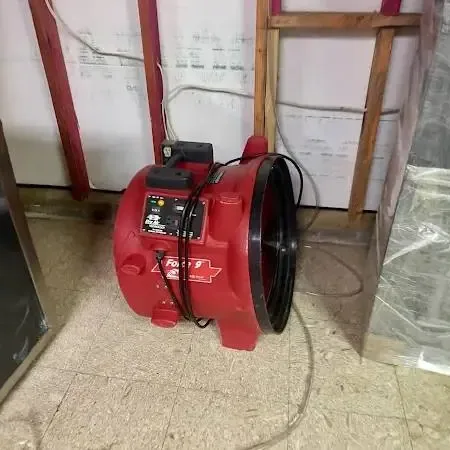
- Drying equipment runs until readings match a dry reference.
The program and an insurance claim are separate
A county program and an insurance claim answer different questions. The program looks at preventing the next backup, while a policy looks at paying for the damage already done.
Policies treat sewer backup differently from other water losses, and some need a separate endorsement. A homeowner with repeat backups can ask the insurer how backup coverage works before the next storm.
- Keep the plumber's report with the insurance file.
- Photograph damage before removal starts.
- Ask the insurer what documents it wants for a backup loss.
Records that help with any program or claim
The county's questions about neighbors and past cleaning show that documentation matters. Notes taken during and after a backup are useful to the county, an insurer or a plumber.
A short self-check such as the basement flood risk check lists the drains, window wells and sump pits worth noting.
- The date and time of the backup and the weather that day.
- Photos of the drain, the water and the damage.
- Whether neighbors reported backups too.
- The plumber's report or camera inspection, if one is done.
Questions
Does every Mission home qualify for the Backup Prevention Program?
No. The county offers it to eligible homeowners inside its service area, and the home needs a confirmed sanitary sewer basement backup from an intense rain event caused by capacity problems.
Does the program clean up the basement?
The program funds a backup prevention device or plumbing modifications. Removing contaminated materials and drying the basement is separate restoration work.
Will a backup device stop a backup caused by roots?
Johnson County Wastewater says a device will not fix lateral issues such as roots, cracks or a broken pipe.
What if the water came through a window well?
The county says the program will not fix window well leakage or surface water flooding. That water is cleaned up under its own category, which depends on where it came from.
How many estimates does the program require?
Eligible homeowners gather written estimates from at least two plumbing contractors, and funding follows the lowest comparable estimate.
What does televising a sewer mean?
Televising means sending a small camera through a pipe to see its condition. The county looks for a record of cleaning and televising the public sewer as part of its screening.