On July 25, 2025, a 24-inch forcemain broke near 87th and Mission Rd, and the Johnson County Department of Health and Environment issued a public health advisory near Leawood Heritage Lake. The message was plain: avoid standing water, because of the E. coli risk.
Key takeaways
- A forcemain is a pressurized pipe that pushes wastewater along, so a break can leave sewage-carrying water on the ground.
- The advisory followed the July 25, 2025 break and was lifted at the end of July.
- The county told people to avoid standing water because of E. coli risk, and the same caution fits sewage water inside a house.
- Water from a sewage source is Category 3, so porous materials it touches are removed rather than dried and kept.
- Bare hands, wet vacuums and household fans are the wrong tools for sewage water; trained crews use protective gear and controlled drying.
What happened near 87th and Mission Rd
On July 25, 2025, a 24-inch forcemain broke near 87th and Mission Rd. The Johnson County Department of Health and Environment responded with a public health advisory near the lake.
People were told to avoid standing water because of the risk of E. coli. The advisory was lifted at the end of July.
A forcemain is a pressurized sewer pipe. Pumps push wastewater through it, so when one fails, the sewage does not simply drain away.
It can surface and collect in low spots.
- Date of the break: July 25, 2025.
- Size of the pipe: 24 inches.
- Advice from the county: avoid standing water.
- Advisory lifted: at the end of July.
Why standing water gets a public warning
E. coli is a bacteria found in human and animal waste. When sewage reaches a puddle, the water can look ordinary while carrying enough bacteria to make people ill.
Standing water is the concern because it stays where children, pets and shoes can reach it. Moving water thins out, but a puddle in a low spot keeps its load until it is removed or dries.
- Children and pets are the most likely to splash in, touch or drink from puddles.
- Shoes, tires and paws carry bacteria to doors, floors and yards.
- Skin cuts and scrapes give bacteria an easy way in.
- A warning ends when the county lifts it, so the safe move is to wait for that notice.
Water spreading right now? Shut off the main if it is safe. The restoration team extracts, dries to the IICRC S500 goal and documents every step, 24/7.
Reach the drying team for your homeOutdoor puddles that raise the same concern
Not every puddle is sewage, since rain leaves plenty of ordinary water behind after a storm. A puddle with a sewage smell, a dark or gray color, or no rain to explain it deserves extra caution.
Pets that drink from standing water and children who play in it are the usual routes of exposure. The county's advice was simple, and it fits any unexplained puddle: stay out of it.
- A strong sewage or rotten egg smell.
- Cloudy gray or dark water with no recent rain.
- Water that keeps flowing during dry weather.
- Toilet paper, grease or other debris floating in the water.
The same rule applies inside a house
Clean water and sewage water
Restoration work sorts water into categories. Category 1 comes from a clean source such as a supply pipe, while Category 3 carries sewage or other heavy contamination.
Water from a toilet, a floor drain that backs up or a broken sewer pipe is Category 3 from the start.
The gray area in between
Category 2 water, sometimes called gray water, comes from sources such as a washing machine or dishwasher discharge. It is not sewage, but it can still make people ill, and it turns into Category 3 if it sits.
What stays and what goes
Carpet, pad, low drywall and insulation that soak up sewage water are removed. Hard surfaces are cleaned and sanitized, and the structure is dried afterward.
Sewage backup cleanup follows that order because contamination travels into porous materials and cannot be rinsed out.
First steps if sewage water enters a home
Nothing about a public advisory outdoors changes the first moves indoors: stop the exposure, then bring in the right crew.
A household that shares a bathroom or a lower level with the affected area should treat the whole connected space as exposed until the restoration team says otherwise.
- Keep everyone, pets included, out of the wet area.
- Stop using sinks, tubs and toilets that drain toward the affected pipe.
- Skip the wet vacuum and fans, which can spread droplets and contaminated dust.
- Photograph the water, the source and the damage before anything is moved.
- Switch off power to the area only if the panel is dry and safe to reach.
How cleanup and drying work after sewage water
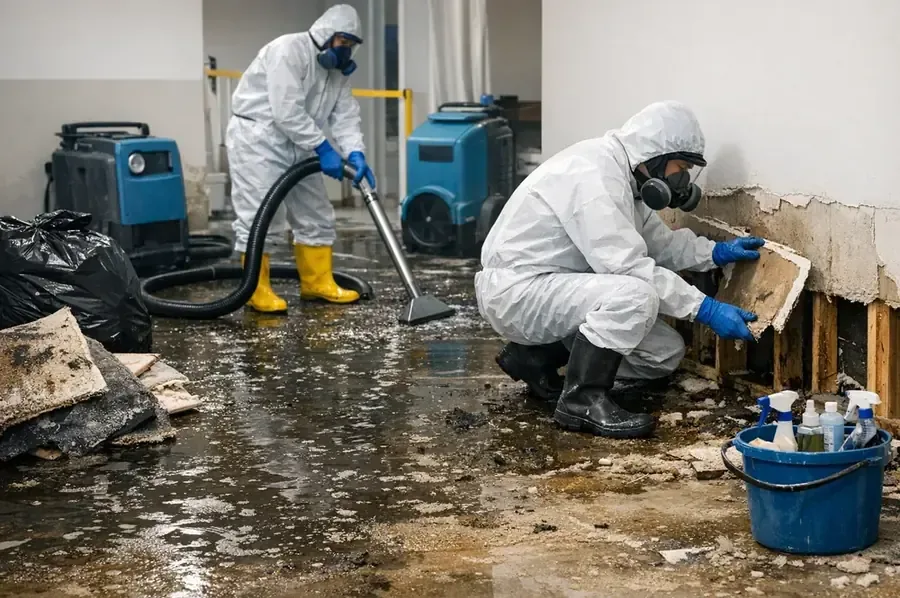
The extraction crew removes the liquid first. Water extraction with pumps and vacuums built for contaminated water keeps the volume from soaking deeper.
Next comes removal of porous materials, followed by cleaning and sanitizing of floors, studs and concrete. Drying equipment then runs, with moisture readings taken, until the structure reaches its dry goal.
Wet materials left behind can start growing mold in as little as 24 to 48 hours, so crews move through the steps without long gaps.
Equipment placement is planned room by room so that contaminated areas stay separate from clean ones. Drying fans come in only after contaminated materials are out, because moving air over sewage residue can spread it.
Shops, offices and shared buildings
Commercial spaces face the same Category 3 rule with an added layer of responsibility. Staff, customers and neighbors can all be exposed if a spread is left in place.
A property manager who acts early limits both the health risk and the downtime.
- Close the affected area and post a clear notice.
- Tell the building owner or manager right away.
- Photograph the source and the water before cleanup begins.
- Keep a log of times, actions and closed days for the claim.
Reading a public notice the right way
A health advisory describes a risk in a place, not a promise about any one property. An advisory near a lake does not say that homes are wet, and a lifted advisory does not say a basement is dry.
Households that want to know their own basement risk can walk through a short checklist such as the basement flood risk check, which looks at sump pumps, floor drains and window wells.
- Follow the county notice until it is lifted.
- Treat a sewage smell or discolored water indoors as its own emergency.
- Keep dated photos of any water that enters a home.
Questions
What is a forcemain?
A forcemain is a pressurized pipe that uses pumps to push wastewater along, often uphill or over long runs. When it breaks, sewage can surface at the break.
How long did the advisory near the lake last?
It began after the July 25, 2025 break and was lifted at the end of July.
Is sewage water in a house the same as clean water from a burst pipe?
No. A burst supply pipe starts as clean water, while sewage water is Category 3 and carries bacteria. That difference decides what is removed and what can be dried in place.
Can a family clean up a sewage spill alone?
Anything that reaches carpet, drywall or a lower level calls for trained crews with protective gear, because the bacteria sink into porous materials and are hard to remove.
Does a public advisory mean a home is damaged?
No. An advisory covers a place and a risk. It does not describe damage to any particular home.
Does a lifted advisory mean the water outdoors is clean?
A lifted advisory means the county ended its notice. It does not certify any particular puddle, so keeping children and pets away from unexplained standing water remains a sound habit.